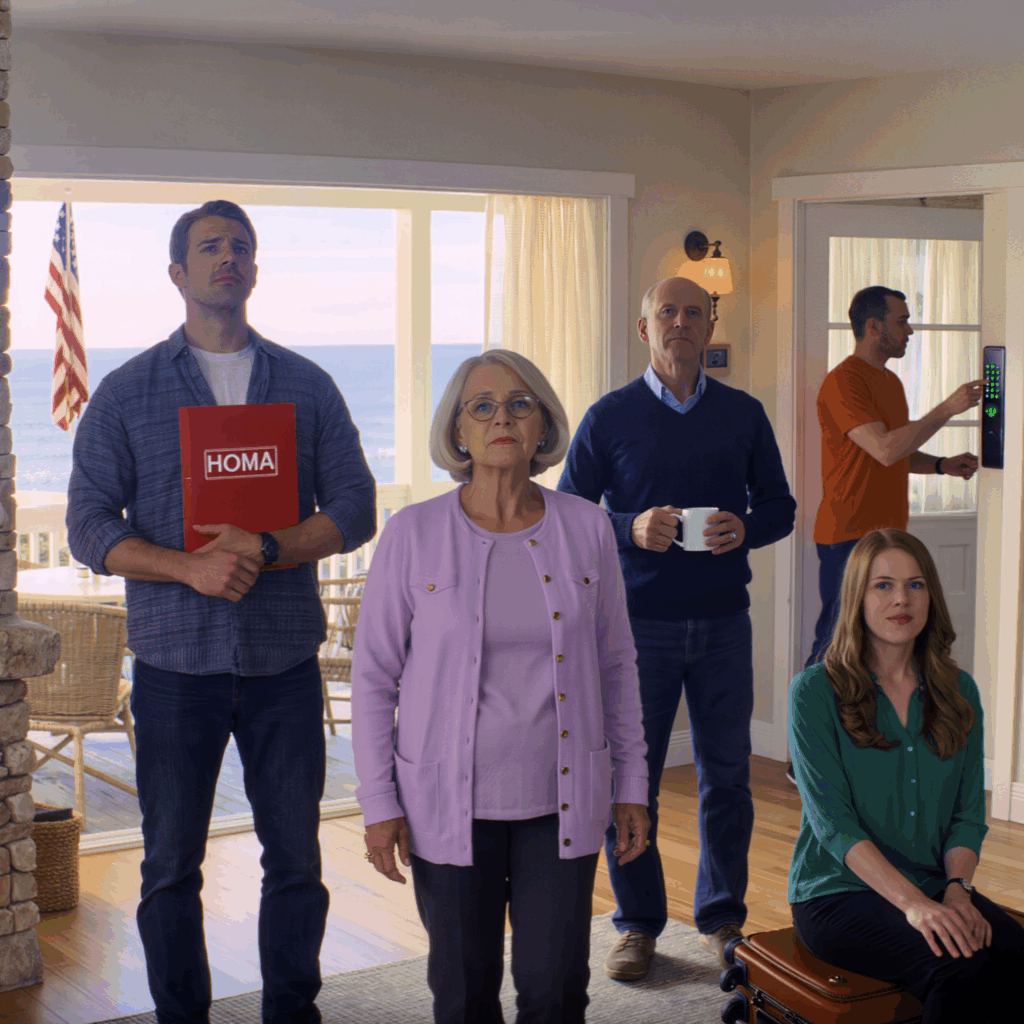
I presented my parents with a beachfront property valued at $425,000 for their 50th wedding anniversary. Upon my arrival, my mother was in tears, and my father was visibly shaken. My sister’s family had claimed the space. Her husband confronted my dad aggressively, insisting, “This is my house. You need to leave.” My sister chuckled until I entered, plunging the room into an eerie silence.
Allow me to introduce myself; I’m Thomas, 37 years old, the oldest child, and the family’s fixer. As a neurosurgeon, my life revolves around the hospital, and I reside out of a locker and a suitcase. I maintain a meticulous schedule, tracing my life through pages filled with notes from 4 a.m. I seldom indulge in alcohol, exercise when possible, and save diligently, having been accustomed to living on the brink of financial strain. As a child, I often translated my parents’ anxieties. “It’ll be alright,” I would reassure my mother while she fretted over bills. I learned to confront fear and navigate crises, ultimately becoming the reliable one.
Two weeks prior, my parents celebrated five decades of marriage, and I longed to present them with a true celebration—a spot where the air was infused with salt, the foundation was firm, and nothing echoed of financial struggles or secondhand belongings. I discovered a charming, albeit slightly askew, blue cottage above the bay; it was inviting, with a white deck and two palm trees swaying gently—yours for $425,000.
I completed the purchase in their names, organized the utilities, filled the refrigerator, and tucked a heartfelt note into the silverware drawer, meant to brighten lazy mornings filled with laughter. “With love, T.” I refrained from informing anyone else, including my sister. On the big day, I drove to the house with a cake and sparkling cider, reveling in the crystal-clear ocean and the sky that was almost too perfect. Happiness seeped through me as I parked but discovered an unfamiliar SUV already occupying the driveway, which set off alarm bells.
The front door stood ajar, creaking in the breeze. I ventured inside to find my mother in the kitchen, clutching a towel as if surrendering. Her eyes were red from tears, while my father sat in a chair, his shoulders slumped and hands trembling amid a sea of boxes. I could hear raised voices from the hallway, accompanied by an animated cartoon blaring from the living room—one I hadn’t activated.
“Mom—” I barely managed to speak before my brother-in-law Kyle appeared, barefoot and holding a beer. He stepped in front of my father, pointing towards the door again, demanding, “This is my house. Get out.”
From the couch, my sister Julia laughed mockingly. “Calm down, Dad. We are merely getting settled.”
The lid of the cake pressed uncomfortably against my palm. An eerie stillness enveloped me. To fully understand why the place I cherished was transforming into conflict, let’s rewind a bit.
Julia, my younger sister by two years, was an artist, then a free spirit, then merely struggling through “a rough patch.” My parents did what they could—sacrificed and tried to minimize chaos. My role was to fill the gaps. Initially, it was covering textbook costs, then a semester’s tuition, subsequently aiding her first apartment down payment until her husband Kyle secured his startup funding. Eventually, it was my wallet taking the hit. I footed the bill for her eldest’s braces when their dental plan faltered. I financed a used minivan when the bank said no, and co-signed a lease post-eviction. Every payment felt like a semblance of control, an effort to smooth over the jagged edges of our family dynamics. I miscalculated.
My parents contributed in less visible, yet equally impactful ways. Mom would fill Julia’s trunk with groceries under the guise of pantry cleaning. Dad loaned his tools to Kyle, who often needed to practice his repair skills—repairs that were ultimately more costly. The narratives never changed: “You know how your sister is.” “Not everyone is like you, Thomas.” “You’ve always been the responsible one.” During residency, I’d pass sleepless nights on call-room mattresses, sending money over a shaky Wi-Fi connection at midnight because “the landlord is threatening to change the locks by sunrise.” Over time, I became just a card to be used without a second thought regarding the balance.
When I identified the coastal property, I treated the acquisition with the precision of a surgical procedure. The deed went into a trust with my parents as lifetime beneficiaries. I established an account for taxes set for the next twenty years and prepaid the homeowners’ association fees. I also changed the locks. Holding the keys felt akin to grasping a lifeline. I informed my parents just a week before the anniversary, allowing them space to process the news privately. We drove there together; my father touched the banister as if playing an old, beloved instrument while my mother explored each cabinet. We sat on the deck, absorbing the calls of seagulls.
“It’s all yours,” I told them.
Though my father struggled to form words, and my mother noted, “It smells like lemon and fresh air,” everything appeared glorious. I stayed overnight on an air mattress to ensure everything functioned smoothly. The next day was spent attending to the medical needs of a boy needing surgery for a tumor the size of a plum. The house remained their sanctuary.
However, complications arose as systems often do. Julia called Mom on the second day, buzzing with curiosity. “Are you by the beach? Whose place is that?” Mom, unable to lie convincingly, muttered, “We’re visiting a friend.” By dinner, Julia had figured out our location based on a blurred photo Dad had posted on Facebook. “Check out our view.” Soon after, she arrived with Kyle, their two children, a dog, and an overwhelming sense of entitlement.
Later, Mom’s voice trembled as she conveyed, “They merely wished to see it. They intend to stick around for the weekend. Is that alright?”
I responded, “This isn’t a rental property.”
She assured me, “We’ll discuss it once you return.”
By the Saturday morning, my father shared confusion via text about the house, “Julia keeps calling it ‘the family home.’ Can you come?” No further messages followed, and I missed another call due to being in surgery. Then came a selfie from Julia standing in my parents’ kitchen with the caption, “Home sweet home. #manifesting.” Friendly comments flooded in from her peers: “So well-deserved.” “Beach vibes.” One from Kyle read, “Finally a place for the children to relax.”
My palm itched from the scalpel’s handle after being in surgery for hours. On my drive back home, I messaged my dad: “Don’t sign anything. Don’t consent to anything. Love you.” I pressed the accelerator, rehearsing calming words for our family. We will navigate this. We will breathe. We will establish boundaries.
Upon entering through the open door instead, I caught a glimpse of Kyle’s voice already filling the space.
“You two are elderly. The stairs could be hazardous. You need to move. This is a family house. We are family. We can manage it.”
Mom interjected, “This is Thomas’s gift—” but he interrupted her.
“He gifted it to you. You’re giving it to us. It’s all the same.”
Julia stayed seated with a smug smirk. “Stop being dramatic, Mom. We’ll handle the bookings.”
Bookings. Kyle waved towards the stunning view. “Prime location, peak season. I listed it this morning. Easy income. You two can use the downstairs during the off-season—”
As I observed my father’s trembling hands, the familiar sight that indicated his anger bubbling beneath the surface, my heart sank. This was the same man who, despite juggling three jobs, found time to attend my high school orchestra concert in a grease-stained uniform. Now, he was being dismissed in a house he had only recently learned was rightfully his.
Raised with the motto of being helpful rather than loud, the last text from Dad loomed large in my mind. I positioned the cake on the counter; it looked out of place amidst fast-food wrappers and makeup essentials. My voice emerged steady and controlled.
“Who informed you that this is your house?”
Kyle rolled his eyes, dismissing my inquiry as if I were dense. “Family money, family home. Don’t act strange.”
Julia chimed in mockingly, “We’re not making requests, Tommy. We’re upgrading.”
Mom appeared visibly upset. “Thomas, can you clarify—”
Kyle pointed at my father again. “He can explain it from the porch.”
Julia laughed. “C’mon, stop that. Dad knows we love him.”
My father remained quiet, unable to articulate his thoughts. I felt a shift within me, a fierce determination.
“Everyone meet in the living room,” I instructed, not loudly, but firm enough to command attention.
The children paused their animated show. The dog stopped chewing on a throw pillow. Kyle sneered but followed because people with his mindset often believe they own the space. I stood by the mantle beneath a framed photograph of my parents slicing a grocery cake from four decades ago. My pulse quickened as I retrieved a folder from my bag and laid out five documents on the coffee table.
“Deed,” I began, tapping the first page—recorded just last week. “The property title belongs to the trust, with lifetime beneficiaries Sam and Ruth—my parents—who possess the exclusive right to reside here.”
Kyle squinted, seemingly grappling with the meaning.
“To put it simply,” I continued, “you won’t have a key, Kyle.”
He chuckled. “Good luck trying to stop me.”
I tapped the second document. “Trust instrument. I am the successor trustee. This grants me the responsibility to maintain the property for my parents. It also obligates me to eject anyone who disrupts their peace.”
Julia’s tone turned saccharine, “Thomas, you can’t be serious. We’re only trying to help.”
I displayed the third document: a color screenshot. “Here’s the Airbnb listing you just put up, using photos you had no right to take. The description calls it ‘Entire home.’ The rules state ‘No owner on site.’ The calendar is fully booked through August. The payout is directed to the account ending in digits that match yours, Kyle. I blurred them for the kids.”
Kyle shifted uncomfortably. “So what? Your parents could use the money, man.”
I placed the fourth document: a printed group chat exchange from the previous night. Julia, unaware that Dad had sent it to me, had commented, “We’ll convince him. He always gives in if Mom cries. I’m excited to have a beach place finally.”
Julia reached for it, but I covered it with my hand and placed the fifth document on the table—a laminated copy of the HOA rules. I traced my finger down to the relevant clause. “No short‑term rentals permitted.”
“This is how it’s going to unfold,” I stated firmly. “You are going to gather your belongings today. You will remove the listing, text everyone who booked and inform them that the house is no longer available, and issue refunds. You will apologize to Mom and Dad for scaring them in their own kitchen, and you will leave the house key on the table.”
Julia blinked, processing my words. Then she erupted in laughter, high-pitched and incredulous. “Or what, Tommy?”
“Or,” I replied, “I will execute my role as the trustee.”
Kyle stepped towards me, chest puffed out as if we were still children. “You can keep your duty,” he sneered.
“Mom, please,” my mother whispered.
I prefer to maintain my composure rather than raise my voice. Hence, I kept my tone precise. I placed my phone on the table, screen up. Displayed on it was a drafted email to the HOA board with relevant attachments; another composed for their lawyer; a third intended for the county recorder, equipped with the Airbnb link and a request to flag the property for illegal use. A text thread was also open with a locksmith named Victor, who was parked nearby, aware that I had called him while traveling back when Dad sent that initial “some confusion” text.
Kyle observed and shifted his stance. “You wouldn’t dare.”
“I would,” I confidently replied, asserting that the actions were already in motion.
Julia instinctively reached for Mom. “Mom, tell him he’s overreacting. This is family.”
Mom’s gaze remained fixed on me. “Thomas,” she uttered softly, “you must do what you feel is necessary.”
Kyle’s expression shifted again. He pointed toward the door, the same obnoxious gesture that initially sparked the confrontation. “Old man out.”
I stepped in front of my father. My hands felt steady, having handled complex surgeries with precision. “Point at my father once more,” I said quietly, “and the only exit you’ll be taking is the one Victor will securely lock from outside.”
Silence enveloped the room as the cartoons faded into the background.
Julia sought another tactic. “You’re heartless,” she charged. “You’re abandoning your family.”
“I am no longer being your wallet,” I replied. “That isn’t abandonment; it’s setting a boundary.”
Kyle muttered, “We’ll see about that,” and lunged for the folder—whether to seize the deed or shred it in an attempt to neutralize the trust.
I quickly secured the documents, placed them away, and directed my attention to Dad. “Pop,” I asked, “would you prefer to remain in your living room?”
His throat worked, but he managed only to say, “Yes.”
“Then only those who reside here should proceed to pack their belongings.”
No one took action. The doorbell chimed. Victor had arrived punctually.
The ensuing chaos took three hours because social entanglements unfold at a slower pace than they begin. Victor exchanged the deadbolt while Kyle took out his frustration in the driveway, venting at Julia, kicking the curb, calling someone to ascertain the legal ramifications. The dog barked incessantly. The children maneuvered like bashful shadows, stuffing clothes into bags while casting furtive glances at me, as though I might spontaneously erupt. I remained calm, seated with Mom at the kitchen table while making tea in the kettle I had gifted. She dabbed her eyes with a napkin.
“I regret not having informed you,” she admitted. “I thought we could manage it. They arrived so swiftly! They insisted it would be easier this way. No stairs for your father, less cleaning. They promised they would oversee the burdens.”
“The burdens are what make it ‘ours,’” I reminded her.
She nodded—a small, guilt-ridden acknowledgment reminiscent of when she apologized about the weather.
Dad gazed out at the ocean. “I thought I could be stronger,” he said. “I should have demanded they leave.”
“You called me,” I reassured him. “That is the courageous part.”
In the living room, I opened my laptop, connected to my mobile hotspot, and initiated cancellation for every unauthorized booking. I personally notified each customer: “Listing removed by the owner. Refund processed.” I attached the HOA regulations for the one threatening to leave a negative review. I drafted a brief letter for the neighbors explaining, “If you have seen vehicles, there was a misunderstanding. No short-term rentals will occur at 24 Seaspray.”
Julia tried to reinterpret the situation at least thrice, beginning with, “We were merely eager for them to enjoy it.” She perched atop a packed suitcase, feigning hurt. “I longed for the children to bond with their grandparents more, considering your demanding schedule.” Second attempt: “It’s reasonable if you think about it. You’re hardly around. They’re getting older. We are the lively ones.” Third attempt—when I failed to engage her—she swung for the fence. “You believe that money makes you the parent, Thomas? It doesn’t. You distribute funds to avoid being a human being.”
“I didn’t buy a permission slip for you to appropriate,” I countered. “I bought a house for our parents.”
She recoiled at the implication, then turned icy. “Well, remember this,” she warned.
“I sincerely hope so,” I responded.
Kyle resisted yielding the key. “Come and take it,” he grinned—innocent enough if Victor hadn’t installed a new keypad lock just minutes earlier. I reached past him and pressed “0”—then promptly reprogrammed it with a code my dad chose as Kyle observed, powerless against his losing grip.
Kyle swapped tactics. “Do you think you’re clever with your documents?” he taunted. “I know a guy.”
“I have connections with the county clerk,” I said evenly. “And your guy is about to inform you that a trust prevails over a tantrum.”
Kyle met my gaze, uncertain if I was bluffing. I wasn’t.
Finally, as boxes were loaded into the SUV, Julia lingered on the porch. “You could have simply communicated with me,” she stated.
“I’ve been attempting to communicate with you for a decade,” I replied.
Her expression hardened. “You’ll regret this when they require assistance and you’re not available.”
Surveying Mom as she poured tea, and looking at Dad whose hand rested peacefully on the armrest, I contended, “I am present—for them.”
They departed, the dog barking as they drove off, as if it too had an opinion on ownership dynamics.
Once they left, the atmosphere shifted. The breath of the ocean flowed through the screen, and I could hear my parents’ rhythmic inhalations. I wandered from room to room, picking up juice boxes, a mismatched tiara, and stray socks. In the guest room drawer, I stumbled upon a folded document—Kyle’s business strategy. He had projected monthly earnings at five times the HOA fines. In the margin, Julia had scribbled, “Tom won’t refuse if Mom pleads.” I set the paper down gingerly, as if it held a razor’s edge.
Mom continued to apologize for any disorder. I kept reassuring her, “It’s merely crumbs.”
As sunset approached, Dad grasped my arm. “Son,” he began, “I’m at a loss for words without sounding as though I’ve failed both of you.”
“You haven’t failed us,” I stated. “You provided for us to the best of your ability. Perhaps you simply contributed too much to her for too long. We all did.”
Dad nodded without dispute because the truth was both evident and liberating. I prepared a simple dinner, and we dined together on the deck. Mom recounted her first apartment, recalling a mouse she named Bernard because he appeared only on Sundays. Dad laughed—a sound I cherished when he was relaxed, unguarded.
My phone buzzed—a flurry of messages followed. Julia lamented, “You upset Mom.” Kyle sent, “Cease and desist, Dr. Boy.” An unknown sender, later identified as Kyle’s cousin, inquired, “Are we visiting next weekend? We’ve already invited guests.” I turned my phone face down, focusing on my salad.
That night, I organized the alarm system, installed a whimsical doorbell camera that would be a delight for my parents. The codes were saved in a folder labeled “Happy Things” with bold letters for Dad’s ease of reading. In a drawer named “Boring Armor,” I placed copies of the trust, deed, and HOA guidelines.
As I exited, Mom stood in the doorway, her sweater pulled close. “I regret that it reached this point,” she confessed.
“I don’t,” I replied. “It was necessary.”
The subsequent week was tumultuous, like a wobbly table. Julia launched a vehement campaign in the family chat: “Thomas stole a home from the children.” Screenshots cascaded in from relatives I scarcely knew. Julia’s Instagram stories displayed stark backgrounds adorned with accusatory text—“When wealth breeds cruelty.” She followed with a photo of my car parked in the lot accompanied by, “Some people believe they can purchase affection.”
I chose silence. I built a small barrier around myself. I reached out to an aunt who speaks her mind. I outlined, concisely, that the house belongs to my parents and shall remain theirs as long as they draw breath. She replied, “Finally, Thomas,” and that settled it.
I sent one email to Julia and Kyle—polite yet assertive. I highlighted three key points: All correspondence about the residence will go through me. You do not have authorization to approach the property. Any infractions will provoke HOA and attorney intervention. I included myself on the cc and no one else. I programmed the email to auto-respond to any future messages they would send regarding the house. I vowed not to engage in negotiations with a narrative that perpetually concluded the same way.
Two days later, a ping alerted me to a new booking inquiry for “Sea Spray Cottage.” Kyle had relisted the property under a different account, complete with a photo of the back deck. I forwarded this information to the platform’s trust and safety team along with the deed and trust documentation. A mere ten minutes later, the listing was deleted, and the user banned. Yet I felt no triumph; only the sense of a custodian cleaning up after a game.
One morning, Dad called to report the house smelled of toast and salt; he had finally slept through the night for the first time in ages. Mom texted a picture of her feet resting on the deck railing, polished in bright pink, reminiscent of a time when I believed she was a movie star. They appeared vibrantly alive.
In the backdrop of this warmth, Julia continued to test the walls. A payment request for “emotional damages” landed in my app. She mailed my parents a letter starting, “As your primary caregiver”—a title with which she had no claim. Kyle shared a meme depicting a syringe in a dollar sign, insinuating I was profiting from misdeeds.
However, their clamor did little to alter the atmosphere in the little blue house.
One evening, Julia reached out from a blocked number. I answered, caught between softness and hope. She fell hushed upon hearing my voice. Then, she shifted to another line of persuasion—a whisper.
“Tommy, please listen. We’re struggling financially. Kyle just lost his job. We risk losing our apartment. The kids—”
I squeezed my eyes shut, realizing there’s a threshold where compassion becomes fuel for the flames.
“Julia,” I responded, “our residence is not up for discussion.”
“So, money takes precedence over family,” she retorted, reverting to a defensive posture.
“Establishing boundaries enables me to be a family member without acting as a bank,” I asserted.
The line went dead. I embraced the silence, allowing it to linger like a patient in recovery—watched over, safeguarded, yet painfully healing.
Two weekends later, I set off early with coffee in hand, still wearing my stethoscope from the previous shift. The water glistened in the morning light, as if it were taking a moment to breathe. I repaired a squeaky door hinge and positioned tennis balls on the garage shelf to aid Dad while parking. I affixed labels on circuit breakers, knowing Dad appreciated them. Mom prepared pancakes, burned the first batch, and chuckled. At the table, we shared mundane conversations about groceries, the neighbor Jan’s shell collection, and the rebellious pelican who refused to act dignified. For an hour, Julia’s name remained unspoken—it felt as refreshing as a sparkling clean surface.
After breakfast, Mom grasped my hand lightly. “I plan to speak with your sister,” she informed me. “Not to argue—just to say no.”
“I’m not asking you to choose,” I countered sincerely, meaning every word. “I wish for you and Dad to enjoy your porch in peace.”
She offered a small smile. “It’s not about making a choice,” she replied softly. “It’s about halting the charade.”
Dad cleared his throat, reflecting on his past teachings. “I should have imparted that lesson more effectively. I taught you to work, but I failed to instill the importance of saying ‘no.’”
“You taught me love, and how to stay by your side,” I responded. “I’m merely navigating the ‘without losing myself’ part.”
His soft laugh radiated warmth and gratitude.
I walked the yard’s edge, tightening the gate latch, checking the camera positioning. I designed a small sign for the entrance table: “Welcome home, Sam and Ruth.” It felt both endearing and wholly appropriate.
Later, while alone on the deck, I contemplated the title my sister might assign to my narrative: “I gifted my parents a home and shattered my family.” But that was misrepresentation. What transpired is that I ceased fueling the troll lurking under the bridge. I offered a gift and then shielded it from becoming a weapon. I used to convince myself that dispelling money maintained harmony. It didn’t; it merely muffled the noise while resentment simmered within the walls. Early boundaries appear louder, yet they cultivate a profound tranquility no one can feign.
As the messages waned, Julia turned her attention elsewhere. Kyle found another hill to shake his proverbial fist at. My parents began asserting gentle refusals that subtly affirmed their autonomy. “No, we can’t babysit the children this weekend.” “No, we can’t drive across town to fix your car.” They began embracing small joys—saying yes to impromptu sandwiches, restful afternoons, and delighting in spotting boats with amusing names.
A month passed, and my teenage niece—full of music tee shirts and wide eyes—direct messaged me, saying simply, “The house is beautiful. Grandma looks content there.”
I quickly replied, “Come visit, but only with Grandma’s consent. No rentals—just pancakes.”
She responded with a laughing emoji followed by an enthusiastic, “Okay.” A minor truce with someone untouched by the turmoil.
Yet another evening, after a lengthy case, I drove to the house needing to see it illuminated from within. From outside, I observed my father, glasses slipping down his nose as he read in his chair—the same way he settled into our old apartment when only the television light pierced the darkness. Mom lounged under a blanket, a puzzle sprawled across the table. The sound of the ocean streamed in, surrounding everything like a soft bass line. I didn’t enter. Instead, I stood on the sidewalk, allowing the quiet to underscore the significance of this entire journey.
Here’s the truth I’ve come to learn: love does not mean shielding someone’s wrongful actions with your presence. It isn’t indulging chaos merely because it plagues your kin. Love thrives in a home with bright, welcoming light and safe, locked doors. It’s within the legal protections when people falter. Love means imploring your parents to relax and instructing everyone else, “No, I am not their bank. I am not their scapegoat. I am not the exit strategy they resort to when their flames grow too intense.” I am their son—a man with a career that demands precision, a sibling who has finally realized that precision belongs at home too.
If my sister desires to stand on this deck and gaze at this water alongside our parents, she’s welcome. She can arrive bearing empty hands and a heartfelt apology, not a financial strategy. She can fulfill her family role without meddling with the environment.
In the meantime, the house remains. The locks click in place. The gulls bicker. The windows resonate in harmony when the wind tumbles in from the bay. Within, my parents exhale freely. That’s the lesson, if there’s one to grasp: a gift shouldn’t come at the cost of oneself. A boundary doesn’t signify hostility; it’s how love keeps its porch light glowing without igniting the entire neighborhood.