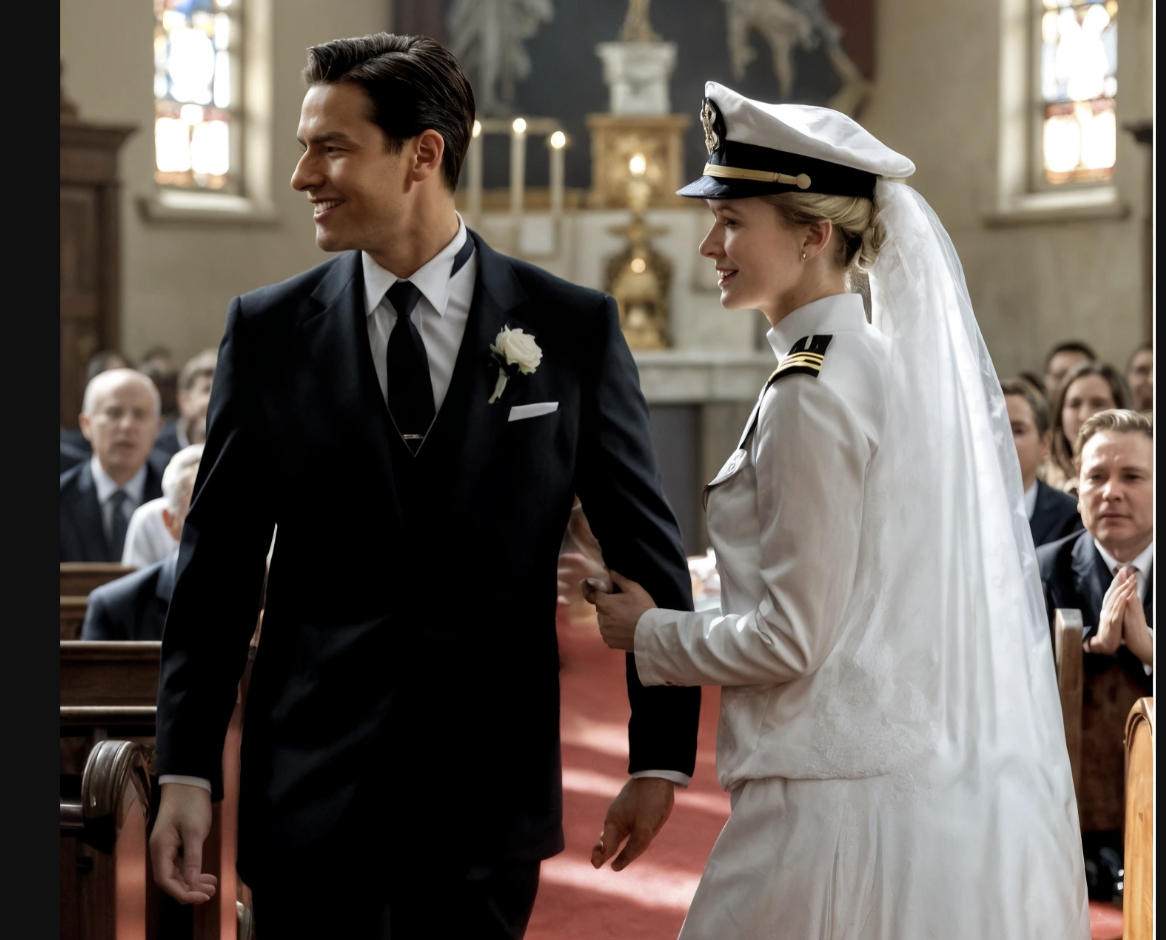
I have always believed that weddings brought out the best in families. As a child, I watched my cousins tie the knot; scenes reminiscent of postcard moments unfolded before my eyes. Everyone gathered around the cake, stories flowed freely, and older women shed a sweet, bittersweet nostalgia for the children they had raised, who suddenly seemed all grown up. I imagined my own wedding would mirror this experience. Not perfect—my family has never been flawless—but at least decent. Kind. Respectful.
Family Games.
Yet life has a peculiar way of bringing you down just when you believe you have found solid ground.
The day before my wedding started off rather peacefully. I had returned from Virginia two weeks earlier, directly from the base. Nothing spectacular was on the agenda, just some administrative tasks and training evaluations. My leave had been approved without any issues. My fiancé, David, was already in town, staying at his parents’ cozy single-story home just a few blocks away from the quaint white church with the pointed steeple where we had chosen to hold our ceremony.
For a brief moment, everything mirrored that perfect picture of small-town America: mid-June sunshine, church bells ringing the hour, neighbors trimming their hedges. Even my parents seemed manageable. Not warm, but composed. They had always kept their distance from me, especially since my engagement. However, I thought this wedding might be the olive branch we all needed.
By late afternoon, I was sitting at the kitchen table with my mother, going over final details. She focused more on her list than on me, yet maintained a polite demeanor. My father paced about, hardly speaking, just grumbling softly as he passed by the fridge. My brother, Kyle, loudly scrolled on his phone, as he always did when he wanted attention without having earned it.
The atmosphere felt tense and rigid, as if everyone was tiptoeing around a topic nobody wanted to address. Still, I held onto hope. I had spent most of my life wishing my family would meet me halfway.
At six o’clock, I went upstairs to check on my outfits. Yes, outfits. I had four dresses hanging neatly in their garment bags along a wall in my old childhood room. One was a satin A-line, another a lace mermaid style, a simple crepe gown, and a vintage number I had bought from a shop in Chesapeake. I was never one for the “princess dress” look, but I liked having options, and David loved seeing me happy, so he had encouraged me.
The room still bore a slight scent of cedar and old carpet. I remember unzipping the first bag just to have another look at the dress, imagining the feeling of slipping it on the following morning. I even let out a small laugh, feeling a flutter of excitement that I thought I had long forgotten.
I had no idea that it would be the last peaceful moment I would have with my family.
Dinner was awkward but calm. My father barely spoke. My mother fretted over my brother. Kyle made a mockery of me once—it was just a silly, inconsequential comment—but I let it slide. I had promised myself to let a lot slide, just to have a drama-free weekend. By nine o’clock, I went to bed early. I needed rest, and in small towns like ours, weddings always start early.
David called to wish me goodnight and for a moment, everything felt safe again. I drifted off to sleep believing that morning would bring joy.
At around two in the morning, I woke to the clear sound of whispers. The door to my room clicked softly. Light footsteps moved across the hallway. At first, I thought I was dreaming, but then I noticed a strange detail: a faint smell of freshly cut fabric. The air felt disturbed, as if something had been recently moved.
I swung my feet to the floor, turned on the bedside lamp, and glanced at the dresses. The bags no longer hung straight. One was askew. Another was not fully zipped. My chest tightened. I rose, crossed the room, and opened the first zipper.
The dress inside was not merely damaged. It was destroyed.
The air rushed from my lungs. The gown had been cut clean in two, sliced through the bodice, the fabric below fraying where the scissors had slipped. I unzipped the second bag. Slashed. The third. Slashed. The fourth. Ripped apart, ruined beyond repair.
I don’t recall dropping to my knees, but somehow, I was on the floor. I felt the ground beneath my palms before I realized someone was entering the room behind me.
My father.
He didn’t seem angry. He didn’t appear ashamed. He looked satisfied.
“You deserved it,” he said calmly. “Do you think wearing a uniform makes you better than this family? Better than your sister? Better than Kyle? Better than me?”
My mouth opened, but no sound came out. My mother stood behind him, her gaze averted. My brother’s silhouette was visible over her shoulder, arms crossed, with that self-satisfied half-smile he always wore when he wasn’t the target.
“Go back to bed,” my father ordered. “The wedding is off.”
Then they left. The door clicked shut behind them. And for the first time since I had become an adult—after missions, funerals, promotions, sleepless nights on the other side of the world—I felt like that unwanted little girl I had once been.
But this was not where my story ended. It didn’t break me. Not in the slightest.
In the darkness of that room, surrounded by shredded silk and tatters of lace, I made a decision that would change everything.
I didn’t sleep after they left. I sat on the carpet, knees pulled up, surrounded by what had once been my wedding dresses: pieces of lace, torn bodices, and cut fabrics hanging like raw skin. The space felt like it was closing in around me, tightening with each breath.
Yet something inside me began to stir. Slowly, stubbornly, like an old engine being revived after a long winter. I had seen worse. Not broken bones, but things that crush everything you believe you are worth. Missions, losses, endless sleepless nights. I had faced danger more times than my family could ever imagine. Yet, in some ways, this—my own family turned against me—hit differently.
By three o’clock, I stood up. My legs trembled, but my mind was oddly clear. The dresses were beyond saving. Even if a seamstress lived right next door, there was nothing left to salvage. My father had seen to that.
Fine. Let them remain destroyed. Let them lie there, a symbol of what my family thought I was worth.
I took a deep breath, exhaled slowly through my teeth to keep my voice steady. Then I began to pack my bags. Slowly, methodically, just as I had been taught. Heels, toiletries, documents for the ceremony, a small photo of my fiancé in its discreet frame. The note he had written for me: *No matter what tomorrow brings, I will be there, waiting for you.* I tucked it into my bag.
And then, without hesitation, I reached all the way to the back of the closet, behind worn-out shoes, behind forgotten boxes, until I found the garment bag I kept for occasions that called for strength, not softness.
My Marine uniform. Ceremonial dress. Freshly pressed, each button polished, every ribbon aligned, every decoration earned through sweat, determination, and sacrifice. I parted the zipper just enough to see the insignia shining on the shoulders. Two stars. Rear Admiral. A rank I had never boasted about. Ever. A rank my parents had never acknowledged, never asked about, never celebrated. They didn’t respect the life I had built, but that uniform told its story.
And I had no intention of walking into that church as a broken woman.
At four in the morning, I descended with my bags. The house was silent. A single lamp was on in the living room. Probably my mother. She likely imagined I would come downstairs in tears, begging and apologizing for a fault I had never committed. But I felt only a deep calm.
I slipped through the front door into the still cool night air. The sky remained dark, speckled with stars. Another American dawn awaited just over the horizon. I got into my car, turned the key, and the engine purred softly in the sleeping street. Not a single window lit up. Even the porch lights seemed to be dozing.
I didn’t quite know where to go at first, but instinct guided me toward the only place that had never judged me, had never sought to destroy me, had never said I deserved pain.
The base.
Where discipline and dignity mattered more than ego and favoritism. Where salutes were given, not because of shared blood, but because of respect for merit.
I drove up to the guard post, badge in hand. The young second class petty officer stood up upon seeing me. He scanned the badge, read my name, then looked me over. His eyes widened.
“Welcome back, Admiral,” he said, snapping his hand to his temple in a salute so sharp it could cut glass. I returned the salute, then entered the base and parked my car near the temporary housing.
But I was not alone. Under the harsh light of a streetlamp, a figure I would recognize among a thousand stood waiting. Master Chief Hollander. He had no reason to be there at that hour. He followed my car with his gaze, his expression serious, as if he already knew a storm was approaching.
“You weren’t sleeping either?” he called as I got out.
He was one of those old-school Marines, marked skin, penetrating eyes, and a heart infinitely larger than he would ever let on. He had taken under his wing half the young sailors who had come through our base. He studied my face like some elders do: with gentleness, patience, seeing well beyond the surface.
“Tough night?” he asked softly.
I could have lied. Minimized. Said I just needed some fresh air. But something broke inside me at that moment, letting everything bubble to the surface.
<p“My parents destroyed my dresses,” I whispered. “All of them.”
He blinked slowly. Not surprised. Just pained for me. Then he sighed.
<p“Families can be cruel in ways that strangers never will be,” he remarked.
I looked down at my hands. “I don’t know what to do now.”
<p“That’s not true,” he replied immediately. “You already know. Proof is, you came here.”
I frowned. “Know what?”
He gestured toward the bag on the back seat. “That uniform isn’t just clothing. It’s everything you’ve earned. All the sleepless nights, the tough decisions, the sacrifices. It’s the real you. Not the girl they’re still trying to belittle.” His voice softened, slightly cracked with age and experience. “They thought cutting your dress was attacking your identity. But that…” He tapped the car window. “…that, they can never touch.” He paused. “And certainly not those stars.”
I don’t know what took over me, but a shaky laugh escaped. A blend of relief and disbelief. It was the first emotion of the night that wasn’t pain. Master Chief nodded once more.
<p“Go prepare yourself. The world needs to see who you really are.”
I drove to the base’s main housing and entered my room. It smelled of industrial detergent and worn carpet. Nothing remarkable, but clean, safe, neutral. I hung the uniform on the hook behind the door, arranging everything with the precision I had learned years before: collar stays, belt, shoes polished to a mirror shine, ribbons perfectly lined up, medals pinned in the right places.
When I slipped into the uniform, its weight settled on my shoulders like an old friend. Not heavy. Reassuring. It was golden light as dawn broke when I finished. A soft, illuminating glow filled the room, reflecting off the decorations and warming the fabric.
For a moment, I just stared at myself in the mirror. I did not see a broken bride. I did not see a girl seeking approval. I did not see the child my father dismissed with a “you deserved it.”
I saw a woman who had survived everything thrown at her. A woman ready to walk toward whatever awaited her in that chapel. A woman who now refused to shrink herself to make those who couldn’t bear her true size comfortable.
And for the first time that night, I felt a surge of pride.
When I stepped out, the base basked in a golden, velvety morning light. It was that suspended moment on a Saturday morning where nearly everyone still sleeps, where birds lazily chirp on the power lines, where the flag gently flutters in the breeze.
I glanced at the time. 7:30. The ceremony was set for ten o’clock. Guests would start arriving around 9:30, maybe earlier. It would take me less than half an hour to reach the chapel. I had plenty of time to arrive before the worst rumors began to circulate. I knew my parents would rewrite the narrative. *She ran away. She’s unstable. She’s ungrateful. She’s shaming us.*
But that’s the power of truth. It doesn’t need to be defended. It just needs to be shown.
The drive into town felt surreal. The houses passed by: porches with rocking chairs, American flags, neighborhood dogs stretching and yawning in the driveways. A few elderly couples were taking their usual morning stroll. The world seemed normal, solid. The storm was me carrying it.
As I approached the church, my stomach tightened—not with fear this time, but anticipation. The parking lot was beginning to fill. I recognized the cars. David’s parents’ Cadillac, Aunt Rosy’s old Ford pickup, my cousin Aaron’s Chevy. People came and went in front of the entrance, adjusting their ties, smoothing their dresses.
Guests turned toward me when I parked the car. At first, they didn’t recognize me. Then someone pointed, and whispers echoed through the crowd.
I cut the engine and slowly stepped out, letting the morning light cascade over the uniform. Silence swept through the gathering like a wave. The older men instinctively straightened up, as those who have served often do upon seeing another service member. The older women covered their mouths with their hands, their eyes wide. The younger ones looked on like one does at lightning: fascinated, a bit fearful, unable to tell if it was dangerous or magnificent.
David’s mother was the first to approach me. A sweet woman with silver hair and a warm gaze. She looked me over from head to toe, then pulled me into her embrace.
“My dear, what did they do to you?” she whispered, her voice trembling.
Right then, I understood. Someone must have told her something. Or she simply guessed. Mothers like her don’t need details. They recognize cruelty at first sight.
Before I could respond, David appeared beside her. My fiancé, my anchor. He didn’t ask what had happened. He merely exhaled softly, reached out, and brushed the edge of my collar with an almost reverential delicacy.
“There, you look like yourself again,” he simply said. “I’m proud of you.”
I crossed the distance to the chapel doors alone—alone, but not abandoned. Alone in my intention. Inside, the air was cooler, still charged from the night’s chill. The organist turned pages at the back. The guests murmured in the pews, gradually turning toward me as I walked down the central aisle. And there, near the altar, stood my parents.
My mother’s face reacted first, her mouth open. My father’s jaw clenched. But it was Kyle’s reaction that shattered the silence.
“What the hell…” he exclaimed, his voice reverberating beneath the archways. “Look at her ribbons!”
The room fell into a heavy silence, almost palpable. My father’s face drained of color. He gazed at me as if seeing me for the first time—not as his daughter, but as something beyond anything he had ever understood. My mother’s hand flew to her mouth. An aunt whispered to her husband, “My God, she’s an admiral.” Another added, “Her parents never told us.”
The shame that fell over my parents was almost visible. It was the weight of truth—uncomfortable, inevitable.
I didn’t say anything. Not yet. I kept moving forward, every step grounded, heels softly striking the wood with quiet authority. I stopped in the spot where, normally, a bride would stand—sweet, radiant, delicate. I was neither delicate nor sparkling. I stood tall, solid, held by my uniform.
My father gulped. My mother blinked, lost, as if she couldn’t piece together what she was witnessing. My brother would have liked to disappear into the floor. I felt the gaze of dozens of elderly people upon me—grandparents, retired veterans, Sunday parishioners—people who understood the words dignity, respect, service, sacrifice in a way my parents had never sought to comprehend.
I didn’t seek their eyes. I looked only at my parents, speaking to them.
“That,” I said softly, touching one of my ribbons, “is what you tried to cut away.”
My father flinched. My mother’s features crumpled. But I didn’t need to raise my voice. I had no reason to. The truth doesn’t shout. It stands firm. And I was there, standing tall in my uniform, with all my strength, while they paled like the dress they had destroyed.
For a long moment, no one moved. The entire chapel felt frozen, like a photograph where even the dust hesitates to settle. The organist’s fingers hovered above the keys. Aunt Rosy’s handkerchief came to a stop mid-air. My father stared at me as if I were a stranger.
I didn’t look away. I held my ground, every crease of the uniform crisp under the stained glass light. If they had wanted to break me, they were seeing just how utterly they had failed.
It was finally my mother who stepped toward me. Hesitant, without the fragile, tense authority she used throughout my childhood. No, she approached like someone edging close to a fire they had set themselves, hoping not to get burned.
“Honey…” she whispered, her voice trembling. “You should have told us.”
I didn’t flinch. “I did. Several times.”
Her mouth opened, then closed again. She glanced around at the assembly, all those pairs of eyes somehow witnessing every moment of this familial drama with a mix of horror and fascination.
My father cleared his throat. His voice came out raspy, as though he had swallowed gravel. “This is ridiculous,” he muttered. “You’re exaggerating.”
“Really?” I asked calmly.
Kyle, determined not to let his idiot title get snatched away, crossed his arms and huffed loudly enough for those in the last row to hear. “Come on. You’ve always liked playing soldier.”
Several veterans turned so quickly that I thought for a moment they might silence him themselves. He swallowed his next sentence, shrinking visibly.
I stared him down. “My dresses didn’t cut themselves. Someone had to take scissors, Kyle.”
He wriggled. “I… it wasn’t just me.”
“You helped,” I responded. It wasn’t a question. A statement. His mouth clamped shut.
Then my father took a step closer, puffing out his chest as if he was about to deliver one of those sermons he’d given me my entire life: strong voice, hard gaze, expected obedience. He didn’t get a chance.
David’s father, a retired Air Force veteran, a man who commanded respect without even raising his voice, slowly stood from the second row and cleared his throat. His grave and steady voice filled the chapel like distant thunder.
“This young woman,” he said, pointing at me, “has given more to this country than most people in this room. And she walked in here after being humiliated by her own family.”
You could have heard a pin drop.
“I usually don’t speak during other people’s ceremonies,” he continued. “But when I see such a lack of respect toward an officer… and a girl… I can’t just sit by.”
My father’s face turned even whiter, if that was possible. For the first time in his life, he had no words. Or at least none that could save him.
I didn’t want to humiliate them. That was not the goal. I just wanted the truth to be there, in full light. So I took a slow breath and said, in a voice so steady it could have shattered glass:
“Last night, the three of you cut my wedding dress in half. All four of them. Intentionally. And then you told me I deserved it.”
A chorus of gasps rippled through the chapel. More than one elderly woman shook her head. Someone at the back murmured something like, “May God forgive us.”
My mother’s face fell, like a house crumbling. “I… I didn’t mean to… We were stressed. You know, weddings are… they’re nerve-wracking.”
“My uniform has faced far worse than stress,” I replied. “The difference is, it has never torn.”
She reached a trembling hand toward me. She hesitated, quivering, as if she wanted to touch my arm. Perhaps to apologize. Perhaps to pretend nothing had happened. I took a step back. The message was polite but clear.
My father regained his voice, but it came out dry and bitter. “You’ve embarrassed us,” he said. “By coming here in… *that*.”
“*That*,” I repeated, raising my chin slightly, “is why strangers salute me. It’s why young girls write to me for advice. It’s why this country is protected.” I let my gaze linger on him. “And it’s why you can sit there, safe and comfortable, without ever lifting a finger for anyone beyond yourself.”
a low rumble spread through the ranks of veterans. Some nodded, discreetly or not. My father’s eyes wavered—the anger and humiliation battling it out, but humiliation was winning. Then he said it—the phrase he had kept ready to throw at me whenever he felt control slipping away.
“Do you think you’re better than us?”
I shook my head slowly. “No. I just stopped believing I was worth less.”
His jaw hardened. My mother clutched her handkerchief. Kyle stared at the floor.
And then, an unexpected small movement. In the fourth row, my great-aunt Helen, who had never taken part in family disputes, struggled to stand with her cane and said, in a clear voice that carried to the back:
“Child, stand tall. Never let anyone extinguish what God has ignited so strongly in you.”
A wave of agreement followed. It was a clear concession, unambiguous. My mother’s shoulders sagged. My father looked down. Kyle shrank in on himself.
The officiant, having remained still behind the altar this whole time, took a small step forward.
“Would you like to continue the ceremony?” he asked gently.
I looked around the chapel. David’s family regarded me with compassion. My parents, torn between disbelief and a budding, forced admiration. The standing veterans, the elderly couples who offered me small encouraging smiles. Then I turned back to my parents. These people who should have protected me, loved me, supported me gently. They had tried to break me. They had, unknowingly, helped build the strongest version of myself they would ever witness.
I swallowed, lifted my chin slightly, and replied:
“Yes. Let’s continue.”
The officiant nodded, relieved. But before he could say another word, the heavy oak doors of the chapel creaked open again. All eyes turned. A figure entered the light: tall, silver-haired, ceremonial uniform even more impressive than mine. Retired Rear Admiral Thomas Caldwell. He had been my first mentor, the first to see potential in me when my father saw nothing. I hadn’t heard from him in years. He strode down the aisle, firm and steady, until he stood beside me. He looked at my father, then at me, and offered his arm.
“Admiral,” he said in a voice that filled the chapel to its beams, “I believe you deserve an escort who understands the honor of leading you down this aisle.”
My mother gasped—a genuine sound this time. My father’s posture crumbled like a dry twig. Kyle looked away, unable to bear a reality of such intensity. The eldest among the guests nodded. Some dabbed their eyes. Someone whispered, “Now that’s what a family really is.”
I placed my hand on Admiral Caldwell’s arm. But before moving forward, I turned to those who had caused me so much pain. I didn’t shout. I didn’t insult them. I didn’t curse them, even though God knows I had a hundred opportunities to do so. I simply spoke the words I needed for myself.
“You can stay,” I said, my voice soft yet unwavering. “But from now on, you will no longer direct my life. Not today. Not ever.”
My father gulped. My mother clutched her handkerchief. Kyle looked at his shoes. Without adding another word, I turned my focus forward, and the organist, understanding finally what needed to happen, began the opening notes of the wedding march.
Admiral Caldwell leaned slightly toward me and whispered, “I’m proud of you.”
I blinked rapidly to keep my composure, maintaining everything with the same poise the Marine Corps had instilled in me. “Thank you, sir,” I replied softly.
The aisle stretched before me, no longer just a ceremonial path, but a bridge between who I had been and who I chose to become. My father didn’t stand. My mother didn’t reach out. Kyle said nothing. But for the first time in my life, I moved forward without waiting for anyone, and I felt free.
Walking down that aisle with Admiral Caldwell felt like stepping into an alternate version of my own life—a version where dignity was no longer something I had to beg for but something I inherently carried. The organ swelled, guests rose, and for a few seconds, I forgot the tattered dresses, the scissors, the whispered insults, the years of being “the other” girl. Everything softened. Everything settled.
At the end of the aisle, David was waiting for me. His eyes shone not with sadness but with wonder. That kind of silent wonder a man feels when he understands he hasn’t just found a bride—he’s found his equal.
Even as I reached him, as he took my hands, murmuring, “You’re incredible,” I could still feel the gravity behind me. The weight of my parents sitting stiffly on their bench, the tension vibrating in the room like a guitar string strung too tight. It wasn’t shame that humbles. It was the kind of shame that drives people to despair.
The officiant took his cue, trying softly to stitch some serenity back into this torn morning. “Marriage,” he began, “is about commitment, respect, and the courage to choose kindness.”
I saw my mother shiver. The words fell upon her like an involuntary confession. My father leaned forward, elbows on knees, looking like a man wrestling with demons no one else could see. Kyle fixed his gaze on a point on the floor, jaws clenched, eyes shining with guilt.
But they remained silent. The ceremony continued like calm waves. Vows exchanged, rings raised to the light, voices trembling with sincerity. I felt something breaking free inside me—a weight, perhaps, or a chain I had dragged for years. When David spoke his vows, his warm, confident voice, I felt as if I finally stepped into a future that reflected me.
But just when the officiant pronoun the words, “If anyone here has reason…,” my father stood up.
My mother let out a small gasp, clutching his sleeve. Kyle raised his head sharply. A wave of whispers rolled through the chapel. The officiant froze. David gripped my hands tighter.
My father’s voice cleaved the air. “I have something to say.”
All the muscles in my body tightened. Not because I feared him, but because I knew it would be the last battle of the day, and I didn’t know if he would apologize, yell, or rewrite history once again.
He swallowed hard, Adam’s apple bobbing. “I… I didn’t raise her as I should have.”
A silence so profound settled that even the organist lowered his hands.
My father cleared his throat again. “We should have been proud of her,” he said, eyes glued to the ground as if seeking a way forward. “We weren’t.” My mother blinked, tears gathering at the corners of her eyes without yet spilling. “We didn’t understand,” he continued. “Her career. Her choices. Her strength.” His voice quavered. “And instead of trying… we punished her for it.”
My heart began to race. Not with forgiveness, not with rage. Just some kind of strange calm.
He forced himself to continue. “She did things we never did. Things we never even tried to attempt.” He paused a moment. “And last night… was the worst thing I’ve ever done in my life.”
My mother whispered, “Tom…” but he raised a trembling hand. “No. It’s okay for her to hear this. And it’s okay for all of you to hear it.”
I felt the entire chapel shifting. Not toward him. Toward me. Toward the truth.
He looked at me as though he could see the little girl he had lost somewhere within his pride. “I thought by destroying those dresses it would make her small enough for me to understand her again,” he said, prompting several elders to gasp. “But she walked in here… and I’ve never felt so small in my life.”
My mother broke down, this time completely, her sobs reverberating softly in the chapel. Not theatrical, not for show. Fragile and real.
Kyle’s voice cracked just afterward. “I didn’t mean to,” he murmured, eyes reddened with shame. “Dad told me to help. I was an idiot. I’m sorry, sis.”
For the first time that morning, tears welled behind my eyes. Not because they were apologizing, but because I no longer expected it. Not here. Not now. Not in front of everyone.
The officiant stepped back at once, allowing the moment to unfold on its own. No sermon. No verse. The truth needed no commentary.
I took a deep breath. “Thank you for saying that,” I responded with a firm voice, even as my heart trembled. “But today is no longer about dresses.”
My father’s shoulders sagged. “I know.”
“It’s about everything that came before,” I continued. “Years of being sidelined. Years of being treated as less than.” My mother nodded gently, tears streaming down this time for real. “But I’m not here to punish you,” I added. “I’m here to break the cycle.”
A murmur of agreement swept through the room. Soft, respectful, deeply anchored in that silent way that elders seem to say: *You’re doing the right thing.*
I looked at my father. Really looked at him. A man who had never known how to love someone stronger than himself. A man raised by a father who viewed emotion as weakness. A man repeating all that he had been taught.
“Dad,” I said softly. “What happened will never fade. But you can decide what happens now.”
His lips trembled. “I want to try,” he murmured.
My mother squeezed his hand. And for once, it was she who added, “Me too.”
I nodded. The officiant returned gently to his place, clearing his throat. “Shall we continue?”
I turned to David. He gripped my hands and sighed, “You’re incredible.”
And for the first time in a long time, as I faced the altar—no longer as a wounded child, nor a disappointed girl, but as a woman fully standing in her identity—I felt something clean and light blooming within me. Peace. Real peace. The kind that does not come from perfect love, but from the choice to no longer bear the weight of past wounds.
The officiant smiled softly, raising his hands. “Let’s finish what we started.”
Months later, my father sat across from me at the kitchen table, holding his coffee cup like it was fragile porcelain.
“I’ve always thought strength was control,” he said softly. “Now I understand that true strength is standing firm without crushing those around you.”
I smiled. I too had taken a long time to learn that. He nodded, shame slowly giving way to something resembling reflection.
“I’m glad you learned it before I did,” he added. “It saved us all.”
And for the first time, I believed him. Truly.