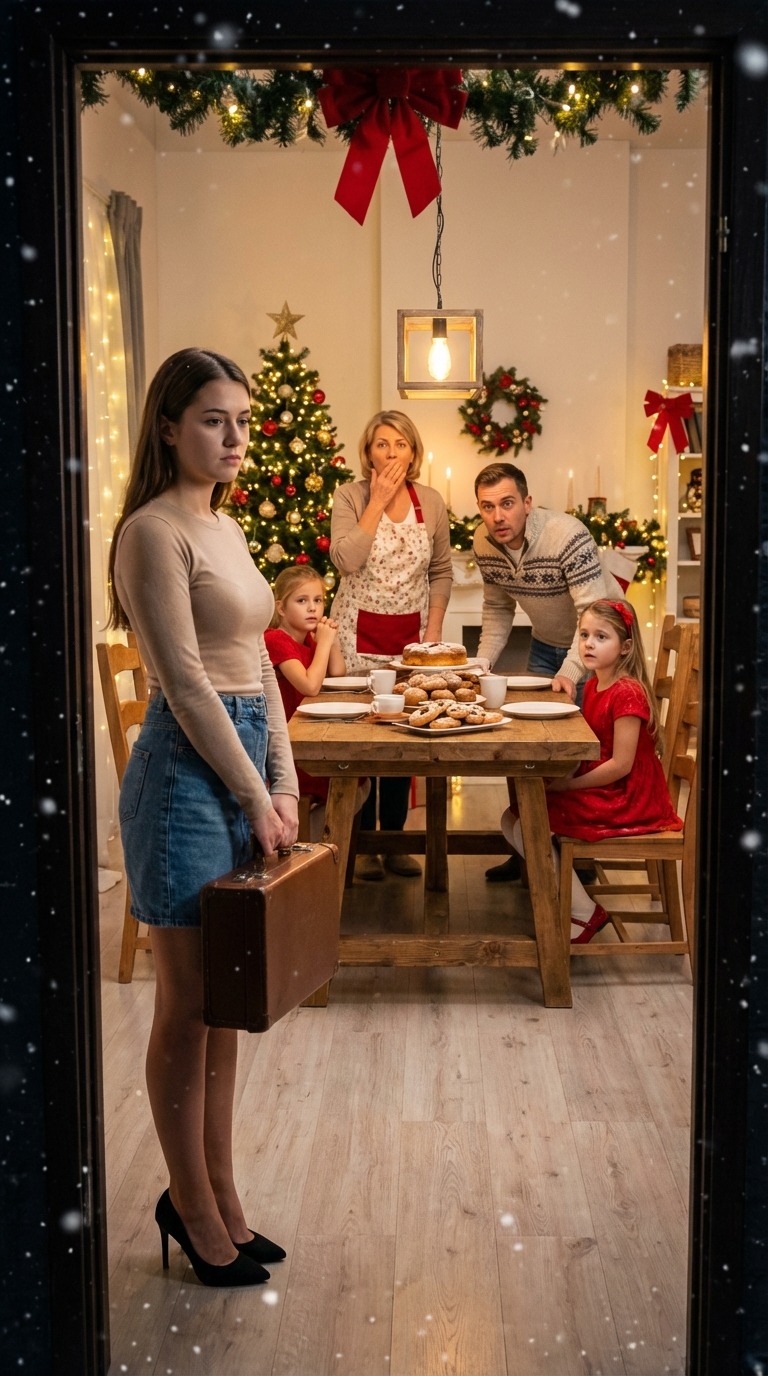
For most of my life, my role in our house wasn’t “daughter.” It was closer to “on-call help.” I cooked the meals, reset the living room after everyone wandered through it, kept the calendar straight, and somehow made sure every gathering looked effortless—no matter how tired I was.
My younger sister, Madeline, got a different experience. In our family, she was treated like something fragile and precious. I was treated like the person who would “handle it.” And because I always did, it became the expectation.
By my twenties, I was working a demanding job while still carrying the invisible load at home: planning, cleaning, hosting, and doing the countless small tasks that keep a household running. The hard part wasn’t the work itself. The hard part was how normal everyone acted about it—as if my time and energy were simply family property.
The Announcement That Changed Everything
A week before Christmas, I walked in from work and found my mom waiting in the kitchen. Her arms were crossed, and she wore that familiar look—half smirk, half certainty—that told me she’d already made a decision for me.
She gave a short, chilly laugh and said, “Your sister’s friends will be here for Christmas—only about twenty-five people.”
Only.
- Twenty-five guests to feed
- A house to deep-clean
- Dishes, drinks, serving, and cleanup
- Extra errands and last-minute details
Then she added, like it was the most natural thing in the world: “You know what to do.”
I stood there, absorbing how casually she’d assigned me a full-scale holiday event. No question. No check-in. No “Would you be willing?” Just a command wrapped in family language.
No Warning, No Appreciation—Just Assumptions
I asked the one thing that mattered to me in that moment: “How long have you known about this?”
She shrugged, completely unbothered. “A few weeks.” Then, with the ease of someone who never expects consequences, she added, “You didn’t need to know earlier. You’re good at handling things last minute.”
That sentence landed heavier than any list of chores. Because it wasn’t praise. It was a label. A box they kept me in.
“You’re good at handling things” can sound like a compliment—until it becomes the reason no one ever helps.
In that moment, I realized something: they weren’t relying on me because they had to. They were relying on me because they could. I had trained them to expect it by always stepping in, always smoothing things over, always sacrificing my comfort so everyone else could relax.
And my mother’s tone made it clear this wasn’t a request for support. It was a demand for service.
The Quiet Decision
I didn’t argue. I didn’t raise my voice. I didn’t list every time I’d been overlooked or taken for granted. Instead, something surprisingly calm settled over me.
I smiled—polite, neutral, almost gentle—and said, “Alright. I’ll take care of it.”
She nodded, satisfied, and walked away as if the matter was settled.
But it wasn’t settled. Not anymore.
- I wasn’t going to beg to be treated fairly.
- I wasn’t going to compete for basic respect.
- I wasn’t going to spend another holiday proving my worth through exhaustion.
That evening, while the house buzzed with its usual assumptions, I packed a small bag. I booked a flight. And I left.
Florida, Space, and the First Real Breath
By night, I was on my way to Florida—not to make a point on social media, not to stage a dramatic scene, but to give myself something I hadn’t had in a long time: peace.
I chose sunshine over stress. Quiet mornings over frantic cooking. A change of scenery over the same old family script.
For the first time in years, I felt what it was like to make a decision based on my own needs—not on what would keep everyone else comfortable.
Sometimes the most powerful “no” is the one you don’t announce—you simply live it.
The Empty Kitchen and the Moment It Sank In
Back home, the plan continued—at least in their heads. They returned expecting to find a bustling kitchen, lists taped to the fridge, groceries stocked, and me ready to serve.
Instead, they found silence. Counters untouched. No simmering pots. No trays prepped. No signs of a holiday meal appearing out of thin air.
My mother’s face went pale when she realized the truth: there was no invisible helper behind the scenes this time.
And then came the real surprise—because when they turned around, the person they always counted on simply wasn’t there.
What I Learned About Boundaries
I didn’t do it to punish anyone. I did it to stop punishing myself.
Families can fall into patterns without noticing. One person becomes the planner. One becomes the peacekeeper. One becomes “the responsible one.” And if nobody questions it, that role hardens into an expectation—until it’s hard to tell where love ends and labor begins.
- Being capable doesn’t mean being available.
- Helping isn’t the same as being used.
- Love should not require self-erasure.
I also learned that setting boundaries often makes people uncomfortable—especially the people who benefited from you having none. Their shock wasn’t only about the missing meal. It was about losing control of the story where I always complied.
Conclusion
That Christmas, I gave myself a gift I’d never wrapped for anyone else: the right to step away. The house could host its own chaos for once. The adults who wanted a party could contribute to making it happen. And I could finally rest without guilt.
If you’ve ever been treated like the built-in solution for everyone else’s plans, remember this: you’re allowed to choose yourself. Boundaries don’t make you unloving—they make you honest. And sometimes, the healthiest holiday tradition is refusing to carry the whole season alone.