When my grandfather, Walter Hale, passed away, I wasn’t prepared for the funeral, the grief, or the storm that followed. I owned one black suit from a long-forgotten interview, and I wore it anyway, standing near the back of the chapel while guests spoke in polished voices about “legacy” and “assets.” To me, he was never just a name in a legal document. He was the man who used to slide extra pancakes onto my plate and tell me the world could wait until I finished eating.
I hadn’t seen my parents in nearly ten years. They had stopped answering my calls long ago and, according to people in town, had quietly erased me from their lives. So when I stepped outside after the service and saw Scott and Brenda Carter standing by the hearse, I felt as if I’d walked into a memory I didn’t want.
My mother looked at me without warmth. “Oh,” she said, as though my presence was an inconvenience. “You showed up.”
My father didn’t offer a hug, or even a nod. He only glanced past me, already scanning the mourners as if someone more useful might appear. “We’ll handle the legal matters,” he said coldly. “Just don’t cause problems.”
Two days later, I understood exactly what he meant.
The Will Reading
Walter’s attorney, Marilyn Grant, held the will reading in a quiet office lined with dark wood and shelves of old case files. The room felt too still, like everyone was waiting for a hidden truth to surface. Marilyn adjusted her glasses, cleared her throat, and read from the document.
“To my grandson, Ethan Hale, I leave five million dollars, held in trust, effective immediately.”
My mother’s chair scraped hard against the floor. “That can’t be right,” she snapped. “He isn’t— he doesn’t—”
Marilyn didn’t blink. “The language is clear, Mrs. Carter.”
My father leaned forward with the practiced smile he used in front of others. “We’ll be contesting this,” he said smoothly. “There are questions of influence, capacity, and intent.”
And they meant it. Within days, I was served papers at my small apartment. My own parents were suing me for the entire inheritance, accusing me of manipulating an elderly man and forcing my way back into his life for money I hadn’t earned.
In Court, They Barely Looked at Me
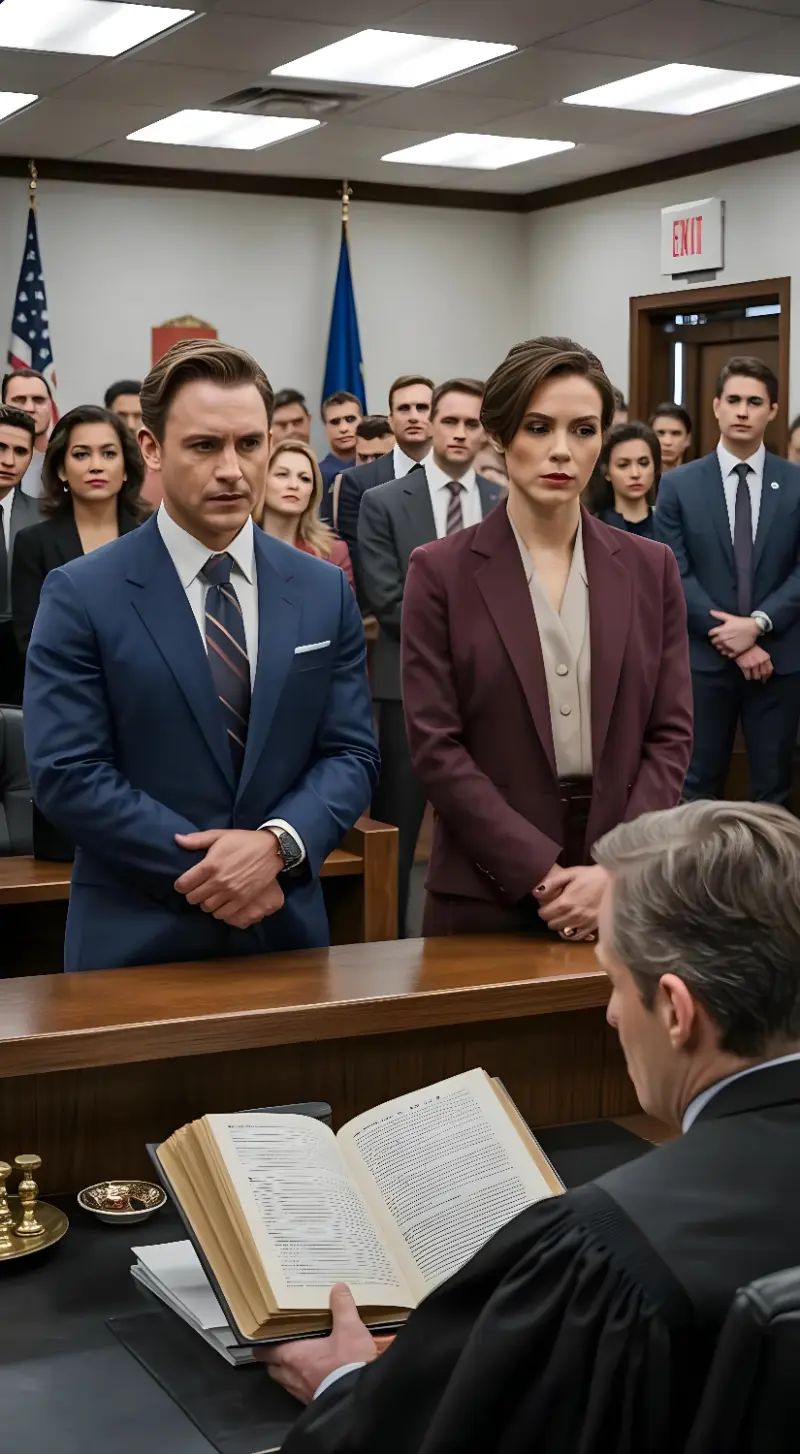
The courtroom was colder than I expected. My parents arrived dressed like they belonged there: my mother in ivory, my father in a sharp navy suit. Their lawyer spoke about me like I was a problem to be managed rather than a person standing in the room.
- They claimed I had “reappeared” only after learning about the estate.
- They insisted I had taken advantage of Walter’s age and vulnerability.
- They treated me like a stranger with no right to speak for myself.
When I sat alone at the respondent’s table, I could feel their certainty from across the room. To them, I was still the son they had ignored, dismissed, and written off years ago.
Then the judge looked down at my file, paused, and slowly lifted his eyes to mine. His expression changed in a way I couldn’t read at first. The courtroom seemed to tighten around us.
His face went pale. His lips parted slightly. “Wait…” he said, quieter now. “You’re…?”
He stopped, staring at me as if he had just recognized something impossible. And in that instant, I saw it too: the confusion on my parents’ faces, the sudden uncertainty in the room, and the first crack in the story they had told about me for years.
My family had spent a decade acting as though I was invisible. But in that courtroom, it became clear they had never truly known who I was.
What happened next would change everything they believed about Walter’s final wishes, about the inheritance, and about me. And when the truth finally began to surface, my parents realized too late that they had made a terrible mistake.
In the end, this was never just about money. It was about love withheld, truth buried, and the moment a family discovered the person they had tried to erase was the one person they should never have underestimated.