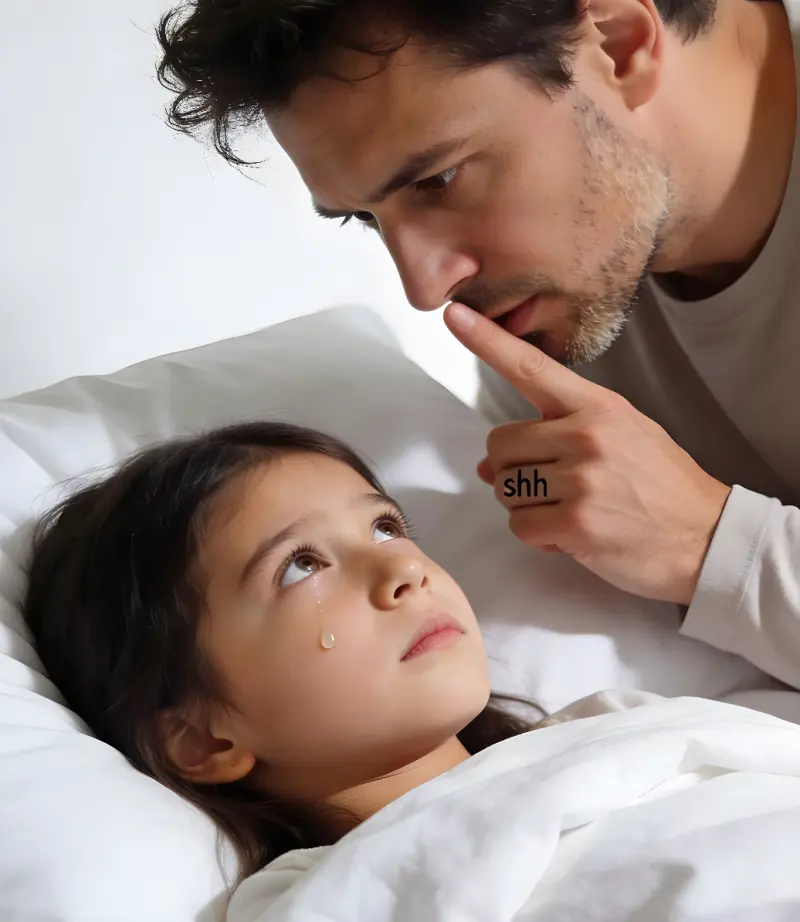
The moment Javier heard his daughter’s voice
Javier Ortega had just come home from a business trip when a whisper from the bedroom stopped him in his tracks. He had expected the usual joyful rush of his eight-year-old daughter, Sofia, but instead he heard a frightened little voice saying that her mother had told her not to speak. In that instant, something felt deeply wrong.
The neighborhood outside was quiet and ordinary, the kind of place where evenings passed with watered lawns, polished cars, and polite nods between neighbors. But inside Javier’s home, the silence carried a different weight. It was the kind of silence that makes a parent’s stomach tighten before they even understand why.
A child afraid to speak
When Javier stepped toward the bedroom, he found Sofia half-hidden behind the door, her small body tense and her eyes fixed downward. She looked as though she expected to be scolded for saying too much. Javier lowered himself to her level and spoke gently, trying to keep his voice calm while his heart raced.
At first, Sofia could barely speak. Her fingers clutched her pajama top, and she kept glancing toward the hallway, as if worried someone might overhear her. Then the truth began to surface in careful, broken pieces. She said her back hurt all the time. She said her mother had called it an accident. She said she had been told not to mention it to her father.
“Mom said if I tell you, it will make things worse.”
For Javier, those words landed like a blow. He reached out instinctively to comfort her, but Sofia winced and pulled away. That reaction said more than any explanation could. Something had happened, and his daughter was frightened enough to hide the pain rather than ask for help.
The truth behind the silence
As Sofia slowly described what had happened, the pieces began to form a painful picture. She explained that her mother had been angry after a spilled drink and had shoved her against a cabinet. Sofia said her back struck a hard edge, leaving her hurting and unable to rest. More than the physical pain, though, was the fear she had been carrying—fear of being blamed, fear of being dismissed, and fear that speaking up would only make things worse.
- A child was hurt and scared.
- She had been told to keep quiet.
- She believed speaking the truth would bring more trouble.
- Her father had returned just in time to notice something was wrong.
In moments like these, the details matter less than the emotion behind them: a child’s need for safety, and a parent’s shock when they realize that trust has been broken inside their own home. Javier did what loving parents do when faced with fear—he listened, he stayed calm, and he took his daughter seriously.
A reminder that children need to be heard
Sofia’s whisper was small, but it carried everything. It was a plea for comfort, for protection, and for someone to believe her. Too often, children stay silent because they think their pain is their fault, or because they fear upsetting the adults they depend on most.
Stories like this remind us how important it is to pay attention when a child becomes quiet, withdrawn, or fearful. A change in tone, a flinch, or a hesitant confession can be a sign that something deeper is happening. The most powerful response is not anger, but steady care, patience, and protection.
In the end, what began as a whispered complaint became a moment of truth. And sometimes, that is exactly how healing starts—with one child finally being heard.