I have two children with my ex-husband, Sean: a 7-year-old boy and a 5-year-old girl. For years, I tried to believe our family would stay together if I just tried harder, loved harder, and gave more of myself. When we first got together, Sean promised he would take care of me and the children. He convinced me to leave my job and stay home, saying that this was what a real family looked like.
I believed him. I built my life around that promise. But over time, something changed. The man who once spoke about partnership began acting like I was no longer necessary. By the end of our marriage, he wasn’t just distant—he was cruel. He threatened to take the children away and make me disappear from their lives. It was a frightening kind of rejection, the sort that leaves a person feeling smaller with every passing day.
The only person who never turned away from me was Peter, Sean’s father. He was a widower, quiet and observant, the kind of man who listened more than he spoke. He came to the children’s birthdays more often than Sean did. He sat beside me at the hospital when I was sick and helped care for the kids when I couldn’t manage on my own. Slowly, without making a big display of it, Peter became my only real support.
Then Sean betrayed me in the most humiliating way imaginable. He brought another woman into our home and eventually threw me out. I had no parents, no relatives to turn to, and nowhere to go. With two children depending on me, I felt as if the ground had been pulled out from under my feet.
“If you want to protect yourself… and the kids… you need to marry me.”
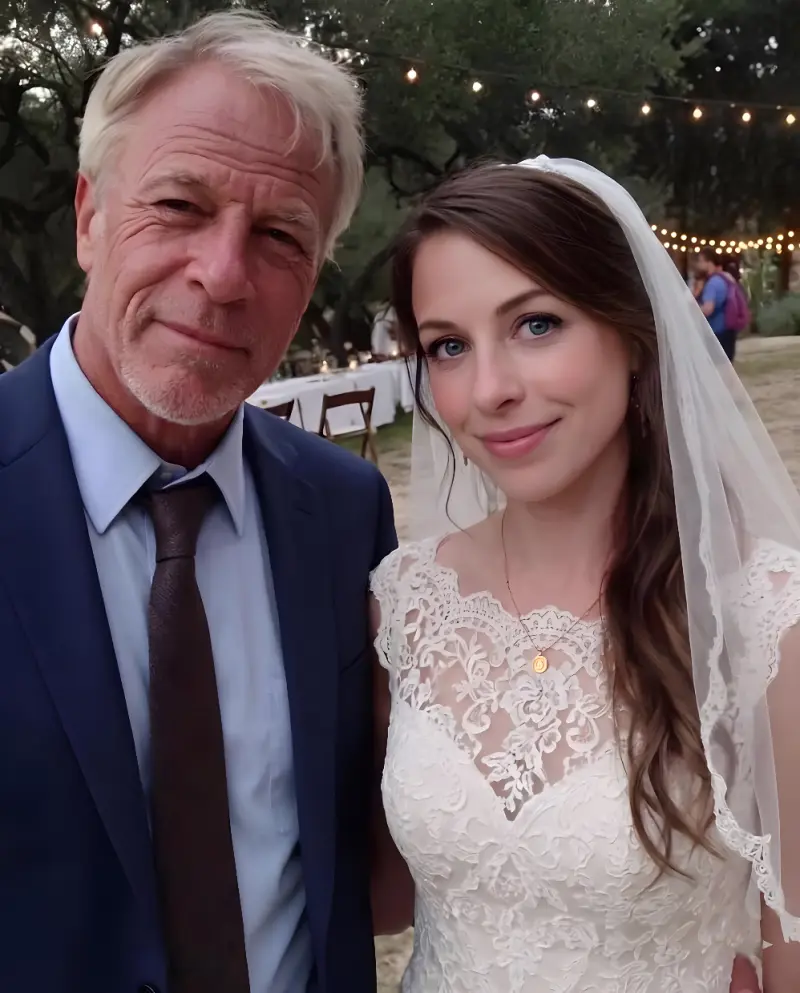
I thought Peter must have been joking. The idea sounded impossible. He was 67, and I was still trying to recover from the wreckage of my marriage. But he was serious. He explained that, in the eyes of the court, the children would remain under his roof, and I would have almost nothing left after nine years of marriage. If I wanted any real chance of stability, I needed to act fast.
So I said yes. Not because it was romantic. Not because I understood it. I said yes because my children came first, and I was out of options. When Sean found out, he exploded with anger, hurled insults at me, and refused to come to the wedding. I didn’t care. I had long stopped expecting kindness from him.
The wedding itself was quiet and strange, filled with tension and relief all at once. But the real shock came later. When Peter and I returned to his house and the front door closed behind us, we were finally alone. He turned to me, his expression serious and unreadable, and said the words that changed everything:
“Now that there’s no going back, I can finally tell you why I married you.”
I stood there frozen, unsure whether I was about to hear a confession, a warning, or something even more unexpected. In that single moment, everything I thought I understood about Peter—and about the life I had just agreed to—suddenly felt uncertain. What I did know was this: I had entered the marriage to protect my children, but Peter seemed to have his own reasons for wanting me by his side.
In the end, what looked like a desperate decision became the beginning of a much deeper truth. Sometimes the person who saves you is the one you least expect. And sometimes, the life you choose in fear becomes the one that finally leads you toward safety, honesty, and hope.