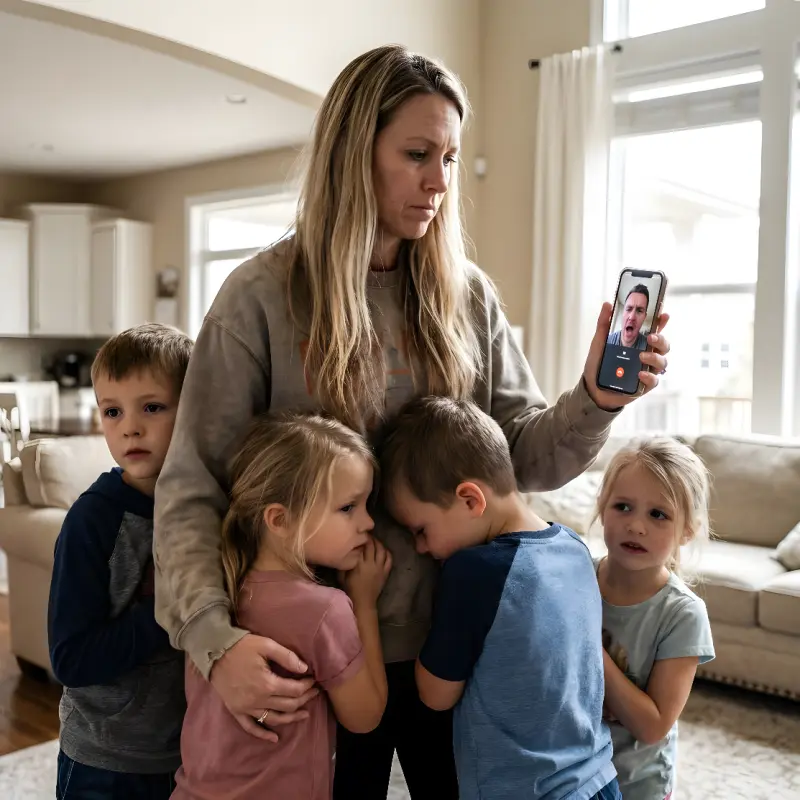
After my husband blocked my credit cards, he sat back and waited for me to come crawling home. He was certain I would fold under pressure. Three children, no accessible money, no car in my name, and no nearby family—he believed he had made escape impossible. What he did not understand was that I had been preparing for this moment far longer than he realized.
The Life He Thought He Controlled
My name is Emily Carter, and I lived in Austin, Texas, with my husband, Richard, and our three children: Ava, Miles, and Sophie. To the outside world, Richard looked like the perfect man. He was polished, dependable, and respected in our community. People saw a financial consultant and church volunteer. They saw a man who spoke politely and carried himself with confidence.
Inside our home, things were very different. Every dollar was monitored. Grocery spending was tracked. Gas purchases were questioned. If I needed anything for the children, I had to justify it. He made sure I never felt fully secure, and he used money the way some people use a locked door.
When I mentioned returning to work after Sophie started preschool, Richard only laughed.
“Who would hire you after all these years?”
That comment stayed with me. It was meant to make me doubt myself, but instead it made something in me go quiet and determined.
The Moment Everything Changed
When I finally told Richard I wanted a divorce, he didn’t argue. He didn’t beg. He smiled as if he had heard a joke I hadn’t finished telling.
“You’ll be back by Sunday,” he said.
He believed I had nowhere to go, no way to survive, and no strength to start over. Then came Friday morning. I was at the store trying to buy milk, diapers, and school snacks when my card was declined. I tried the backup card. Declined again.
Before I could even speak to the cashier, my phone buzzed.
Richard: I’m not funding your little tantrum. Come home when you’re ready to apologize.
My daughter Ava read the message over my shoulder. Her expression changed immediately—not into fear, but into anger. Then she quietly told me to use the green card.
I stared at her. The green card had been my grandmother’s emergency debit card, linked to a tiny account she had opened in my name years earlier. Richard had never known about it. My grandmother had always said she did not trust men who smiled too easily and asked too many questions.
Ava remembered what I had nearly forgotten.
The Paper Trail He Never Saw Coming
That night, I didn’t go home. I drove to a storage unit in Round Rock, where I had hidden five boxes Richard thought I had discarded. Inside were the things I had been quietly gathering for months:
- bank statements showing restricted access to money
- screenshots of messages and payment denials
- photos of receipts he had denied approving
- my paperwork, licenses, and records
- a carefully built file of every financial barrier he placed in my way
It wasn’t dramatic. It wasn’t loud. But it was mine, and it was real.
When Richard called later that night, his voice still carried the same smug confidence.
“Ready to be reasonable?”
I looked at my children asleep on air mattresses in my cousin’s guest room and answered with the steadiness I had been building for months.
“No, Richard. I’m ready to be believed.”
That was the moment the story changed. He had counted on fear, exhaustion, and silence. Instead, he found proof, support, and a woman who had finally stopped doubting her own strength.
In the end, the smallest emergency card, a careful paper trail, and a daughter’s sharp memory became the beginning of our freedom. Sometimes the person underestimated the most is the one already planning her way out.