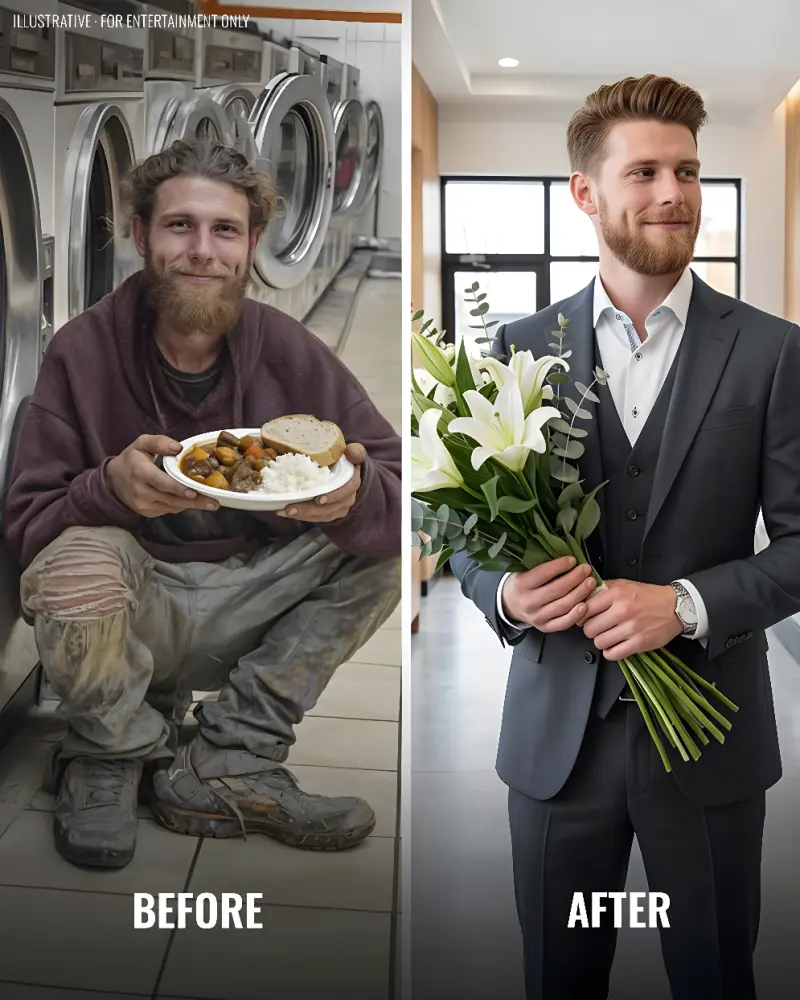
A Christmas Tradition Built on Kindness
Every Christmas Eve, my mom filled our apartment with the smell of comfort. Honey-glazed ham. Creamy mashed potatoes. Green beans with bacon. A pan of cornbread that seemed to warm every corner of the room. No matter how hard life felt, she always made one extra plate.
That plate was for Eli, a young homeless man who spent his days at the local laundromat. He always sat in the same corner, wrapped in a thin blanket, trying to stay out of the way of the world. My mom never treated him like a burden or a stranger. She saw him as someone worthy of dignity, warmth, and a decent meal.
When I was a teenager, I didn’t understand her the way I do now. I thought kindness should come with a visible reward. I rolled my eyes, as teenagers do, not realizing that compassion doesn’t need an audience to matter.
“But dinner still stands,” she would say with a gentle smile, as if feeding someone could be a promise as solid as anything else in the world.
More Than a Meal
Over time, my mom learned Eli’s story. He had lost his family, and life had pushed him into a place where surviving each day took all he had. From then on, she began bringing more than food. Gloves in winter. A warm hoodie. A gift card for groceries. Once, she even offered to help him look for a place to stay.
- She checked in on him without judging him.
- She made sure he never felt forgotten on holidays.
- She treated his presence like it mattered.
He always thanked her politely, but he rarely asked for anything. “I can’t,” he told her when she offered help. “I don’t want to be a burden.” My mom shook her head and told him he was not a burden. Dinner, she said, was still waiting.
Years passed. I grew up, moved out, found work, fell in love, got my heart broken, and kept going. Life became busy, messy, ordinary. Then everything changed when my mom got sick.
After Loss, a Tradition Remained
Cancer did not care how kind she had been to the world. She fought for a year, and it was a difficult year for all of us. I learned that grief can begin long before goodbye. Even the holidays felt different after that. Lights seemed too bright. Songs seemed too cheerful. My mom passed away in October, and by December I was only going through the motions.
Then Christmas Eve arrived.
I stood in the kitchen staring at my mom’s old roasting pan, and for a moment it felt like she was right beside me. I could almost hear her voice, calm and certain: Eli needs some comfort food for Christmas. It’s our tradition.
So I cooked. I followed her recipe, wrapped everything carefully, and carried the meal to the laundromat with trembling hands. My heart pounded as I walked toward the corner where Eli always sat.
The Moment Everything Changed
But when I reached the laundromat, I stopped cold.
Eli was there — but not as I remembered him.
He was standing. He wore a suit, neatly pressed. His hair was styled. His beard was gone. In his hands, he held a bouquet of white lilies. He looked transformed, almost unrecognizable, and yet the moment our eyes met, tears filled his immediately.
“Hi,” he said, his voice rough with emotion. “You came.”
I could barely speak. “Eli…?”
He nodded once. “Yeah.”
My voice shook. “I brought dinner. What is going on?”
He looked at me with a steady sadness and something else I couldn’t quite name.
“Your mom hid something from you,” he said quietly. “Before she died, she asked me not to tell you.”
The room seemed to tilt beneath me. I felt my breath catch in my chest. “What did she hide?” I asked.
And in that moment, with the lilies in his hands and tears in his eyes, I realized this Christmas was about to reveal a truth that would change everything I thought I knew about my mother, about Eli, and about the years of kindness that connected them both.
Some traditions feed the body. Others stay with us long after the meal is gone. This one was about to do both.