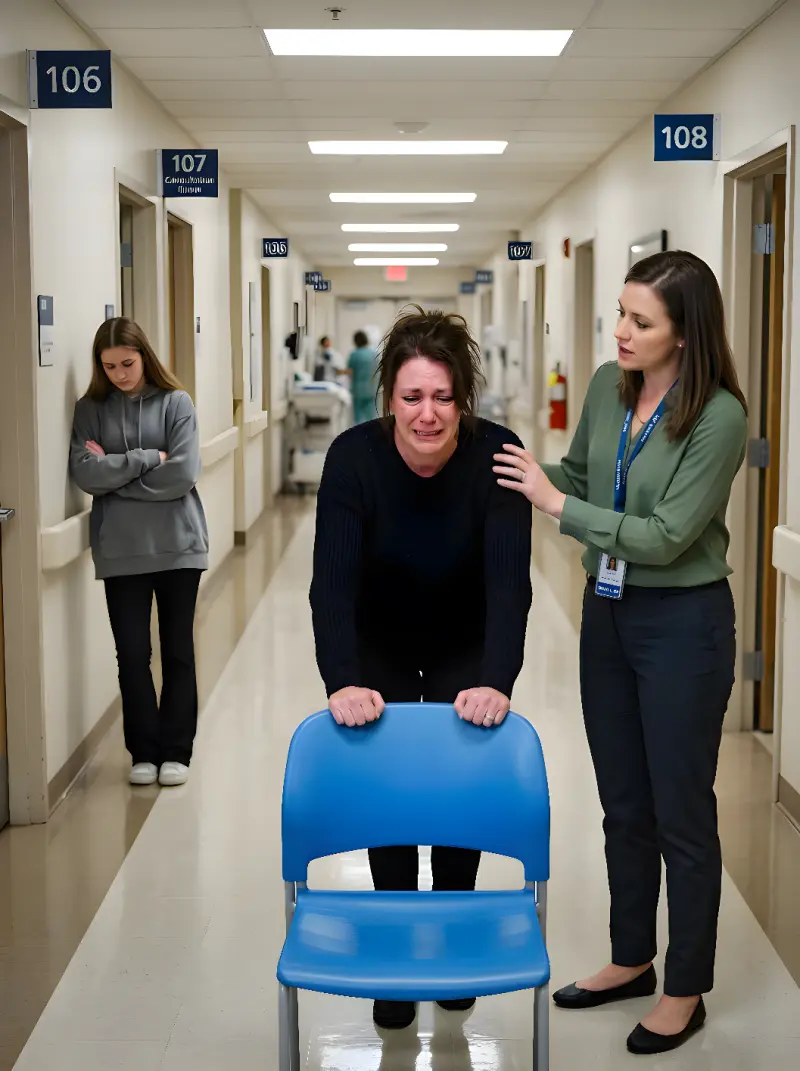
Something Was Wrong Before Anyone Else Noticed
I knew something was wrong long before anyone around me was willing to believe it.
For weeks, my daughter Maya seemed to be fading in front of my eyes. She was only fifteen, but the girl who used to spend hours kicking a ball around with friends, talking on the phone late into the night, and constantly taking photos had become quiet, withdrawn, and exhausted.
She complained of nausea almost every day. Then came the sharp stomach pain. The dizziness. The heavy fatigue that seemed to drain the life out of her little by little.
At dinner, she barely spoke. She barely ate. And whenever someone asked if she was okay, she flinched as if even that simple question hurt.
But my husband, Robert, dismissed everything.
“She’s just pretending,” he said one evening, flatly. “Teenagers exaggerate. We’re not wasting money on doctors for this.”
His certainty was the kind that shut down every argument before it could even start. Still, I could not ignore what I was seeing.
- Maya was sleeping more and more each day.
- She bent over in pain just to pick up her shoes.
- Her face had grown pale, and her eyes looked tired all the time.
I felt as if I were watching my daughter disappear while everyone else acted as though nothing was happening.
The Night I Couldn’t Stay Silent
Then one night, everything changed.
Robert was already asleep when I heard a small sound coming from Maya’s room. I opened the door and found her curled tightly on her bed, holding her stomach so hard that her knuckles had turned white. Her skin looked pale in the dim light, and tears had soaked into the pillow beside her.
“Mom,” she whispered weakly, “please… make it stop.”
That was the moment my last doubt vanished.
The next afternoon, while Robert was still at work, I took Maya to Riverside Medical Center without telling him.
She hardly spoke during the drive. She just stared out the window, looking so far away that it felt like I could barely reach her.
At the hospital, the nurses checked her vital signs, and the doctor ordered blood tests and an ultrasound. I sat there with trembling hands, trying not to let fear take over completely.
Finally, the examination room door opened.
Dr. Lawson came in holding Maya’s file tightly, and the moment I looked at his face, my stomach twisted.
“Mrs. Thorne,” he said gently, “we need to talk.”
Maya sat beside me on the exam table, trembling slightly. The doctor lowered his voice.
“There is something showing on the scan.”
I felt the air leave my lungs.
“Something?” I repeated, barely able to speak. “What does that mean?”
Dr. Lawson hesitated, and that silence frightened me more than any answer could have.
The room suddenly felt wrong, too quiet, too small. My heartbeat thundered in my ears.
“Please,” I whispered, “tell me what’s happening.”
The doctor took a slow breath before speaking again.
“I need to discuss the results with you privately first,” he said carefully. “But before that, you need to prepare yourself…”
I gripped Maya’s hand as tightly as I could, already feeling my world tilt beneath me. Whatever came next, I knew our lives were about to change.
Sometimes a mother’s instinct is the only warning a child gets. And in that room, I learned just how serious a quiet pain can be.