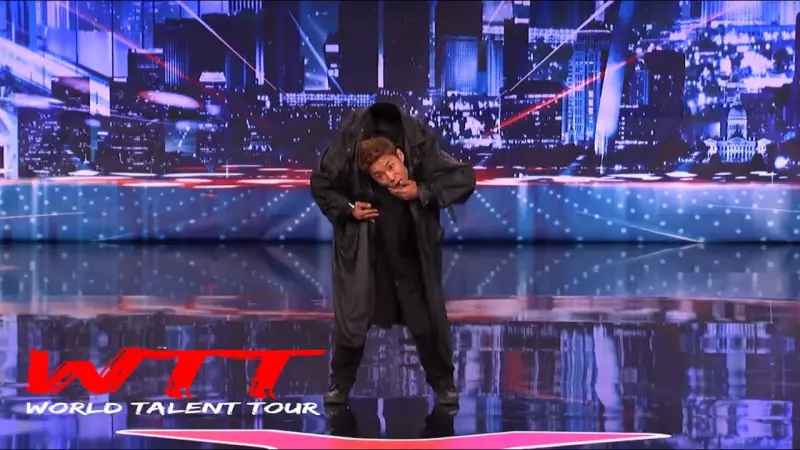
A performance that bent reality on stage
Kenichi Ebina stands out as a performer who has captivated audiences across the globe with a truly distinctive style. His America’s Got Talent appearance is widely remembered as one of the most striking Matrix-inspired dance routines ever shown. He does not simply move to music; instead, he builds a scene where imagination seems to override the usual rules of the physical world.
From the opening moments, the atmosphere appears controlled and almost quiet. Very soon, though, it becomes obvious that this is far from a standard dance number. Ebina relies on slowed gestures, abrupt changes, and awkward-looking body angles to create the illusion of animation. At times, it seems as if his body splits into more than one motion at once, which makes viewers question what they are actually seeing.
Key Insight: The power of the act comes from the way technique and illusion work together so seamlessly.
He also blends martial arts-inspired movement with contemporary dance, and each transition is designed with precision. One motion leads naturally into the next, producing a smooth and continuous rhythm. Lighting and shadow further enrich the effect, giving the impression that more than one performer may be on stage. That combination is a major reason the routine feels so original.
- Slow-motion sequences build tension.
- Sudden shifts create visual surprise.
- Light and shadow deepen the illusion.
- Martial arts and dance merge into one flow.
The response from the crowd grows stronger as the number continues. People first try to decode the mechanics behind the movement, but that curiosity gradually turns into pure amazement. The energy in the room becomes intense, and the judges are clearly taken aback by his inventive style.
One especially memorable section is the “double movement” illusion, where it seems as though several actions are unfolding simultaneously. The effect calls to mind The Matrix, where real life and digital illusion blur into one another. Beyond the technical challenge, the sequence also carries artistic meaning, suggesting ideas of freedom, control, and transformation.
“What makes the routine unforgettable is not only the precision, but the way it turns movement into storytelling.”
In the end, Kenichi Ebina’s performance is much more than a dance routine. It is a complete visual work that brings together motion, expression, and imagination. It proves that when discipline, creativity, and vision align, the result can leave a lasting mark. This remains one of the most iconic moments in America’s Got Talent, and it continues to inspire viewers around the world.
Conclusion: Ebina’s Matrix-style act endures because it does more than entertain; it reshapes expectations. By combining precision, illusion, and artistry, he created a stage moment that still feels fresh, surprising, and unforgettable.