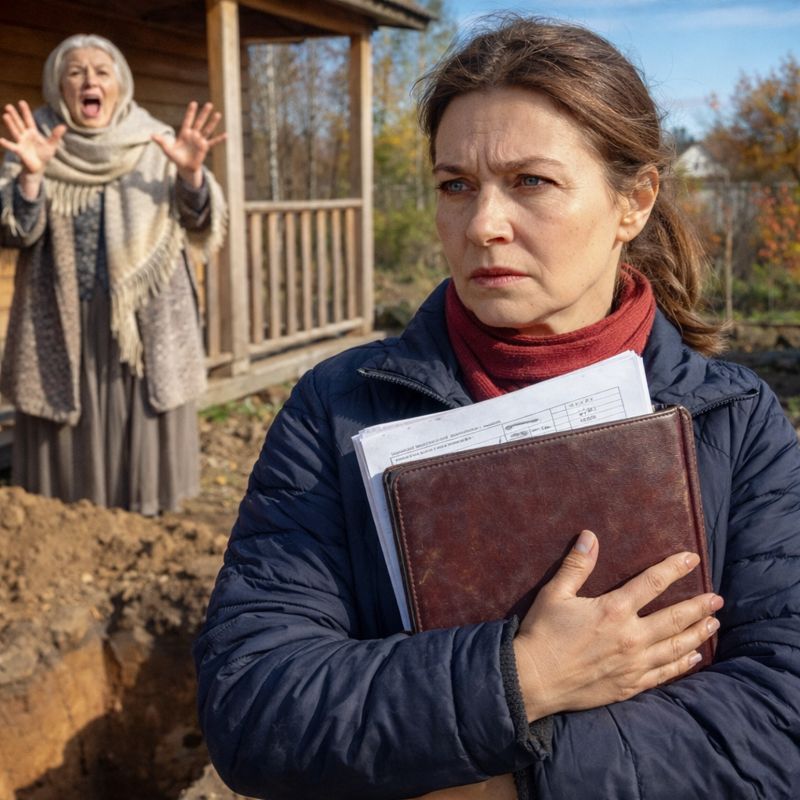
“Lena, what on earth are you doing?” the neighbor, Aunt Valya, shouted through the wind.
Wrapped in her downy shawl, she peered out from behind the fence as if the cold itself might bite. Then she crossed herself, clearly convinced I’d lost my mind.
“It’s November! The ground is frozen solid. Who plants anything in weather like this?”
I tugged my glove tighter and checked the fit around my wrist. The wind really did cut right through layers, yet inside I felt oddly overheated—like my thoughts were burning faster than my body could cool.
“Not planting, Valya,” I said, meeting her gaze without flinching.
“The opposite.”
A garden worth more than money
Just a week earlier I’d been out here protecting the roses—wrapping them in two layers of fabric, smoothing the thorny stems with care, whispering promises of a warm winter. I treated them like something alive that could understand loyalty.
Five years ago, when I first came to this country plot with my husband and his mother, it wasn’t a garden at all. It was a swamp—real mud, reeds, and mosquitoes so bold they seemed the size of sparrows.
His mother, Anna Petrovna, had waved a tired hand back then and sighed:
“Lena, do whatever you want. I don’t have the strength to fight this clay anymore.”
So I fought it.
- I poured every bonus, every side gig paycheck into this soil.
- I chose truckloads of rich black earth over vacations and luxuries.
- I hired people to level the ground and fix drainage where water used to stand for weeks.
- I ordered unusual plants from nurseries and learned how each one needed to be treated.
While others spent on beach trips or new coats, I invested in roots, beds, and borders. I measured paths, planned flowerlines, and worked until my nails stayed stained no matter how much I scrubbed.
My husband, Oleg, used to grin at me from the porch, amused and a little proud:
“You should’ve been an agronomist,” he’d say, like it was a harmless joke.
“I didn’t build this place to impress anyone. I built it because I believed it would stay ours.”
And that was the truth. This plot became my second home—the kind you earn with your back and your patience. It wasn’t just “her” land anymore, no matter whose name might have been on paper. It held my time, my care, my quiet hope.
So when the decision came—casually, almost cheerfully—that the land would be sold “for the beloved daughter,” something in me went still. Not dramatic. Not loud. Just clear.
If this place was going to be treated like a purse to be emptied for someone else’s plans, then I would not leave my work behind like free decoration for the next owner.
That’s why, in the biting November wind, I wasn’t planting. I was taking back what I could—carefully, firmly, without a scene. And for the first time in years, I wasn’t trying to save the garden.
I was saving myself.
Conclusion: Sometimes the hardest thing isn’t the work you put into building something—it’s realizing that others may value it only when they can cash it out. In that moment, clearing the plot wasn’t about revenge. It was about setting a boundary, protecting dignity, and walking away with what truly belonged to me: my effort, my choices, and my self-respect.