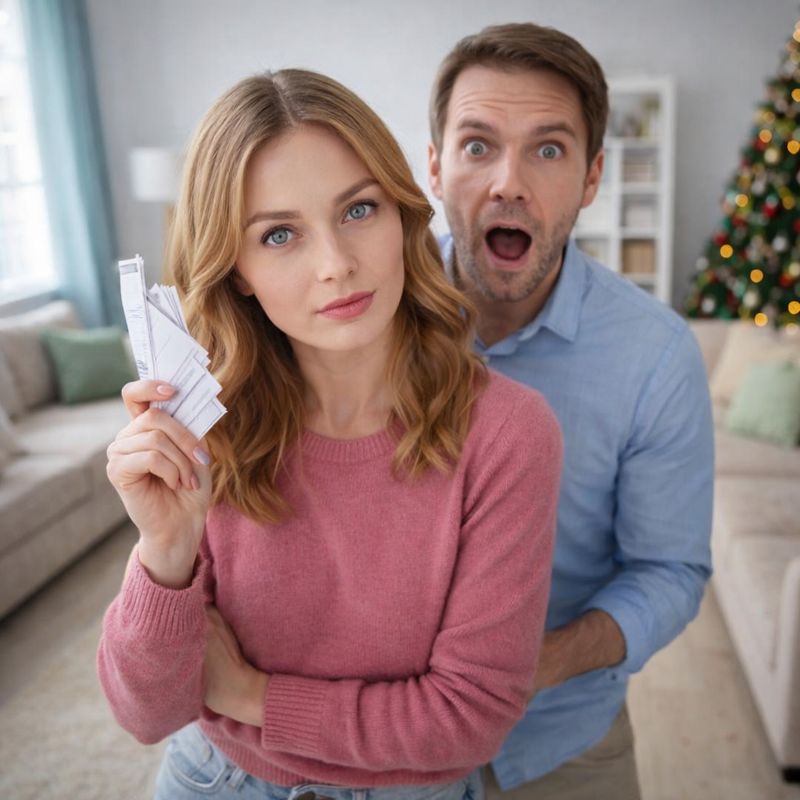
“Where’s my car?” I froze in the hallway with the garage keys clenched in my hand. The metal felt icy, but my chest was burning hot.
I’d gone out to the garage for potatoes we keep in the little storage pit. I swung the doors open—and stared at emptiness. Just an old oil stain on the concrete and a pile of worn tires in the corner. My red Mazda, the one I bought three years ago with my bonus, was gone.
Oleg was in the kitchen, sipping tea like it was an ordinary morning. Cookie crumbs were scattered on the table, and a sticky jam blotch sat where he’d spilled again and, as usual, didn’t bother to wipe it up. The tablecloth clung to my elbows—the kind of small irritation you notice only after you’ve lived with it for years.
“Oleg! I’m asking you—where is the car? Was it stolen?”
He set the mug down slowly and turned to me. No panic. No alarm. Just tired eyes and a flat, careless calm.
“Don’t shout. The neighbors will hear. Nobody stole it,” he said. “I sold it.”
The air seemed to thin. My ears rang with that sharp, miserable buzz you get when your mind refuses to accept what it just heard.
- The garage was empty.
- The car was registered in my name.
- He was sitting there as if he’d only moved a piece of furniture.
I stepped closer, my legs suddenly heavy.
“Sold it?” I repeated, barely above a whisper. “How could you sell it? It’s mine.”
“With a power of attorney,” he replied. “You signed a general one when I handled the inspection. Remember?”
And I did. A year ago, I’d been away on a work trip, and the insurance and inspection deadline was coming up. I’d signed the paperwork so he could take care of it. I never revoked it.
“Why?” I asked, sinking onto a stool that squeaked under me. “Why would you sell my car?”
He broke off a piece of cookie as if that explained everything.
“I paid off my loan,” he said. “The one for the business.”
“What business?” I snapped. “The ‘investment’ scheme? The thing you swore you’d fix yourself? You promised you’d get a second job!”
He lifted his hands in a helpless gesture. “It didn’t work out, Lena. They were talking about freezing accounts. Collectors started calling my mom. I couldn’t let her get stressed out. So I sold it. Don’t worry—I’ll earn it back. We’ll buy another one. Even better.”
“Don’t worry.” Those two words landed like a slap—soft in sound, brutal in meaning.
I looked at him: the relaxed posture, the ketchup stain on his T-shirt, the familiar comfort of a man who expected to be forgiven because he’d decided his reasons were “good enough.” Ten years together, and he still believed my things were his solution.
I walked to the sink, poured water into a glass, and drank it in one go. It was warm and tasted like the inside of a pipe.
“Where’s the money?” I asked.
“I already told you,” he said. “The loan was one point two million. I sold the car for one point three. I kept a hundred thousand for living expenses.”
“Living expenses?” I echoed, incredulous. “And how exactly am I supposed to get to work? By bus? With two transfers? Out to the industrial zone?”
He shrugged like it was a minor inconvenience. “You used to do it. You’ll manage again. We’re a family, Lena. In good times and bad. My debts are your debts.”
“No,” I said, and my voice surprised even me with how steady it sounded.
- His loan was his decision.
- My car was my property.
- Being married didn’t mean being used.
I left the kitchen and went straight to the bedroom. I opened the wardrobe, pulled out a thick blue folder, and flipped through it with shaking hands until I found what I needed.
The prenuptial agreement.
We’d signed it five years earlier when I bought the apartment. My mother insisted back then. “Men come and go,” she’d told me plainly. “Square meters stay. Keep property separate.” Oleg had sulked, offended by the idea, but he’d signed. He’d even put on a noble face and said he wanted nothing from me—only love.
I returned to the kitchen and placed the folder right on top of the crumbs.
“Read it,” I said. “Clause 4.2.”
He frowned, picked up the page, and scanned it.
“What is this supposed to be?” he asked.
“It’s the document that says everything acquired in marriage belongs to the person whose name it’s registered to,” I replied. “And the debts belong to the person who took them on.”
He tossed the paper aside with a scoff. “So what? We’re family. It’s just a piece of paper. I sold the car, and the money went to the family!”
He said it like that should end the conversation—like his confidence could rewrite reality.
But I didn’t come back with the folder to argue feelings. I came back with it to remind him that choices have boundaries, and “family” isn’t a free pass to sacrifice someone else’s stability for your own mistakes.
In the end, the lesson was simple: trust matters, love matters—but clear agreements matter too. When someone treats your hard work like their emergency fund, the most caring thing you can do is draw the line and keep it there.