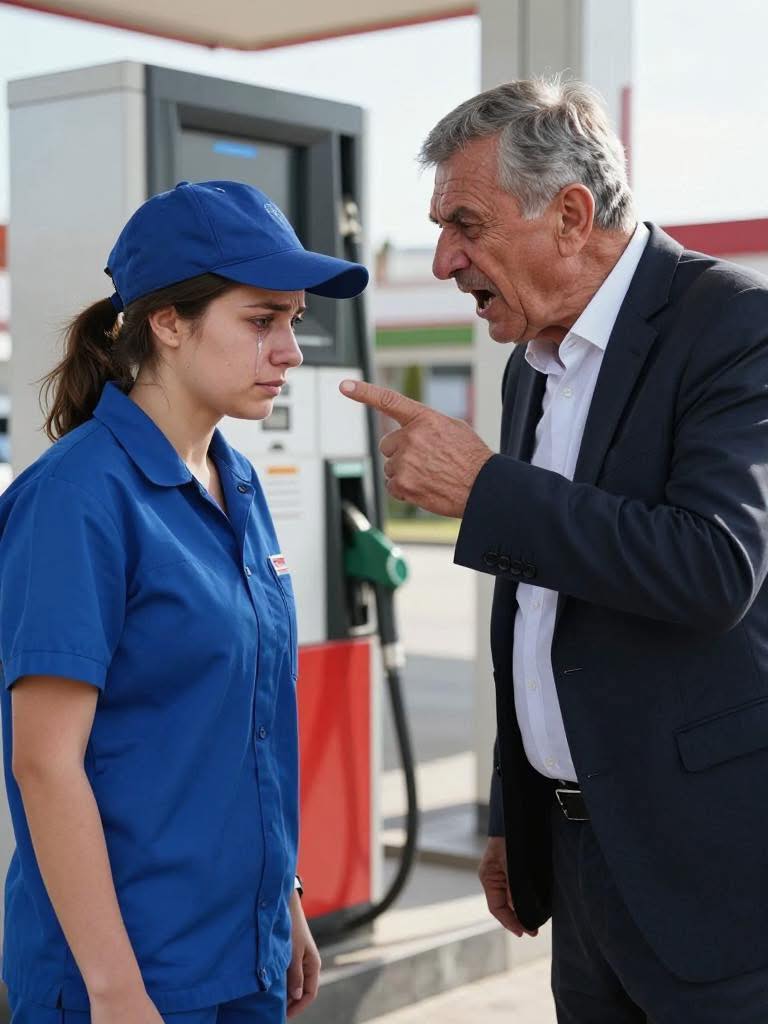
The day started like any other shift at the gas station—routine beeps from the register, familiar smells, and the steady rhythm of customers coming and going.
Then an older truck rumbled into the lot, looking like it had driven through a lifetime of hard miles. The man who stepped out moved slowly, as if carrying more than just fatigue. When he walked inside, his eyes looked heavy, but his voice stayed polite.
He leaned closer to the counter and asked quietly if he could get just ten dollars’ worth of fuel. He explained he needed to reach his daughter because she was going into urgent surgery. Nothing dramatic, no big speech—just a simple request that sounded painfully real.
A Choice Made in Seconds
I didn’t stop to calculate policies, consequences, or what my manager might say. My heart answered before my brain could catch up.
I canceled the original transaction and paid for twenty dollars of gas out of my own pocket. It wasn’t a fortune, but it was enough to help him get farther without worrying about every mile.
- He didn’t demand anything.
- He didn’t argue or pressure me.
- He simply asked—like someone who had already run out of options.
His hands trembled as he thanked me. He didn’t linger. He didn’t try to draw attention. He walked back out, climbed into his truck, and drove away.
I stood there thinking that was the end of it—a small act of kindness tucked into an otherwise ordinary workday.
When Kindness Turned Into Trouble
About ten minutes later, the atmosphere changed like a door slamming in a quiet room.
My manager stormed out of the office, voice sharp enough to turn heads. He accused me of stealing and said I had no right to “give away” fuel, even if I paid for it myself. Before I could fully explain, he made a scene—right there, in front of customers.
Some moments don’t hurt because they’re loud—they hurt because you’re forced to stand in them while everyone watches.
I felt my face burn with embarrassment. My throat tightened. I wasn’t just being corrected—I was being judged, publicly, like my character had been put on trial over a twenty-dollar decision.
Then he said the words that didn’t seem real until they landed: I was fired.
The Door Opened, and Everything Shifted
I stood beside the register, stunned and shaken, trying to hold myself together. The customers avoided eye contact. The room felt too bright, too quiet, too exposed.
And then the front door opened again.
The owner of the station walked in.
He took in the scene—the manager’s posture, my expression, the tension hanging in the air. For a beat, nobody spoke.
- He didn’t rush to conclusions.
- He didn’t raise his voice right away.
- He simply looked around, as if gathering the full story without needing theatrics.
What happened next—how he responded, what he said, and how quickly the power in the room shifted—was the kind of moment that stays with people. Not because it was flashy, but because it reminded everyone watching that compassion still matters, and fairness should never be optional.
Conclusion
That day taught me something I won’t forget: doing the humane thing can sometimes come with a price, especially in places where rules are valued more than people. But it also showed me that integrity has a way of being seen—sometimes when you least expect it. In the end, the moment wasn’t just about gas money or a job; it was about what kind of person you choose to be when someone asks for help.