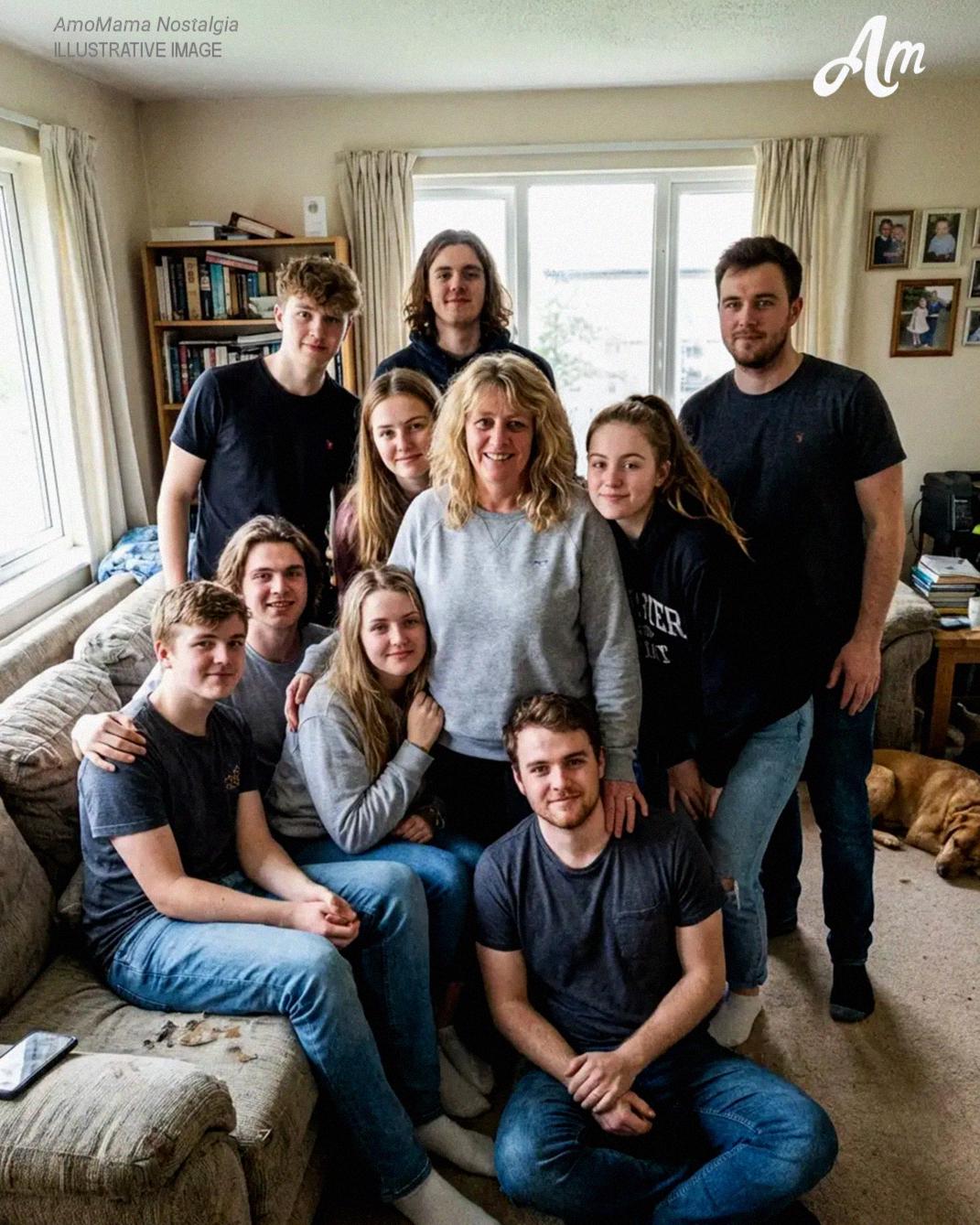
I was fifteen when my father decided the best place to announce a life-changing decision was the church basement. He stood there with a practiced seriousness and told us that God was “leading him in a different direction,” even though he’d been married to my mom for twenty-five years.
At the time, my mother was eight months pregnant with our tenth sibling. Ten kids. A number Dad used to brag about—like our family size was proof that everything was right and blessed.
But that “new direction” wasn’t spiritual at all. It was a twenty-two-year-old choir soloist who had been smiling a little too brightly at him for months.
After He Left, We Learned How to Live Without Him
He walked out that same night. No long talk. No careful transition. Just gone—leaving behind a pregnant wife and a house full of children who still needed rides, dinners, shoes that fit, and someone to say, “It’s going to be okay.”
The years that followed were exhausting in ways I didn’t know life could be. We stretched every dollar. We shared rooms. We made meals out of what was left. My mother cleaned office buildings after midnight, then came home and still managed to wake us for school with a steady voice.
What stuck with me most wasn’t the struggle itself—it was how she carried it.
- She didn’t publicly shame him.
- She didn’t fill our ears with bitterness.
- She didn’t turn our home into a war zone of resentment.
She simply kept us afloat. Quietly. Consistently. Like survival was a promise she refused to break.
Ten Years Later, He Wanted to “Come Home”
Last week—exactly ten years after that church-basement speech—my father called.
His new life had apparently crumbled. The young woman he’d chosen moved on. And now, with age catching up to him and his plans not working out, he suddenly remembered the family he had left behind.
He said he’d “made mistakes.” He said he “missed us.” He asked if he could come back, as if returning were a door he could simply knock on after abandoning it for a decade.
My mother listened, and when she hung up, she looked… torn. Gentle. Loyal in a way I still struggle to understand.
“I think people deserve forgiveness,” she whispered.
I didn’t argue with her. Not because I agreed—but because I already knew what I needed to do.
I Replied From Her Phone—And Set the Scene
I took my mom’s phone and sent him a message that sounded like it came straight from her heart:
“I’ve thought about what you said. Come to a family reunion dinner on Sunday at 7 PM. All the kids will be there. Wear your best suit. I’ll send you the address.”
His reply came instantly, overflowing with gratitude and certainty, like he’d been waiting for permission to rewrite history.
He talked about second chances. About becoming a family again.
- He assumed he would be welcomed.
- He assumed time had erased the damage.
- He assumed my mother’s kindness meant everything would return to how it was.
What he didn’t understand was that forgiveness and access are not the same thing.
He Arrived Smiling—Until He Saw Where He Was
Sunday night came. He pulled up to the address I’d sent and stepped out of his car wearing a suit that looked like it had been chosen for a big “homecoming” moment.
He smiled—right up until he realized he wasn’t standing in front of our house.
This wasn’t a cozy family dining room or a backyard full of kids running toward him.
It was a ceremony hall.
His expression tightened. Confusion turned sharp.
“What is this?” he muttered, scanning the building like the truth might change if he looked hard enough.
He took a step toward the door, then hesitated, suddenly unsure—like he sensed he was walking into something he hadn’t planned for.
“I’m leaving,” he said, as if he could simply exit the consequences the same way he once exited our lives.
I stepped in front of him, steady and calm.
“Not yet,” I told him. “Stay. Just for a moment. Watch what happens next.”
What My Mom Chose to Do
Inside, the room wasn’t set up for a reunion dinner. It was prepared for a different kind of gathering—one that symbolized closure, dignity, and the start of something new.
My mother had spent ten years rebuilding from the ground up. She had raised ten kids through long nights and tight budgets. She had done the work of two parents without asking the world for applause.
And now, she wasn’t standing there to beg for him back, or to scold him, or to relive the pain.
She was there to show him—clearly and respectfully—that her life no longer depended on his return.
- She could forgive without reopening old wounds.
- She could be kind without being taken advantage of.
- She could move forward without pretending the past didn’t happen.
When my father finally understood, his face changed. The confidence drained out of him, replaced by something quieter—something like realization.
Conclusion: Forgiveness Isn’t the Same as Going Back
That night wasn’t about humiliating him with cruelty. It was about truth. About showing that choices have weight, and that love doesn’t mean accepting the same harm twice.
My mother’s heart is big enough to forgive. But her life is also strong enough to continue without him. And I learned something I’ll never forget: some doors close softly—not with anger, but with clarity.