When my neighbor leaned in and asked, “You seem like you’d be good in bed. Are you married?” the entire day seemed to tilt on its axis. Not because it was loud or scandalous—though it was—but because it hit a part of me I’d sealed up years ago.
Her name was Emma Brooks. She’d moved into the place next to my ranch about six months earlier, bringing city confidence and a stubborn willingness to learn country life the hard way. She wasn’t the type to pretend she had it all figured out. She tried, failed, laughed, tried again.
And me? I’m Jack Carter. I run the ranch, mend fences, feed animals, fix what breaks. On the outside, I looked like a man who had his routine handled. On the inside, I’d been living on autopilot for five long years.
Sometimes you can keep moving for years and still not feel like you’re actually living.
Emma and I had spent months doing that careful neighbor dance—small talk across fence lines, brief nods in the driveway, the kind of polite distance people keep when they sense someone else is carrying a private storm.
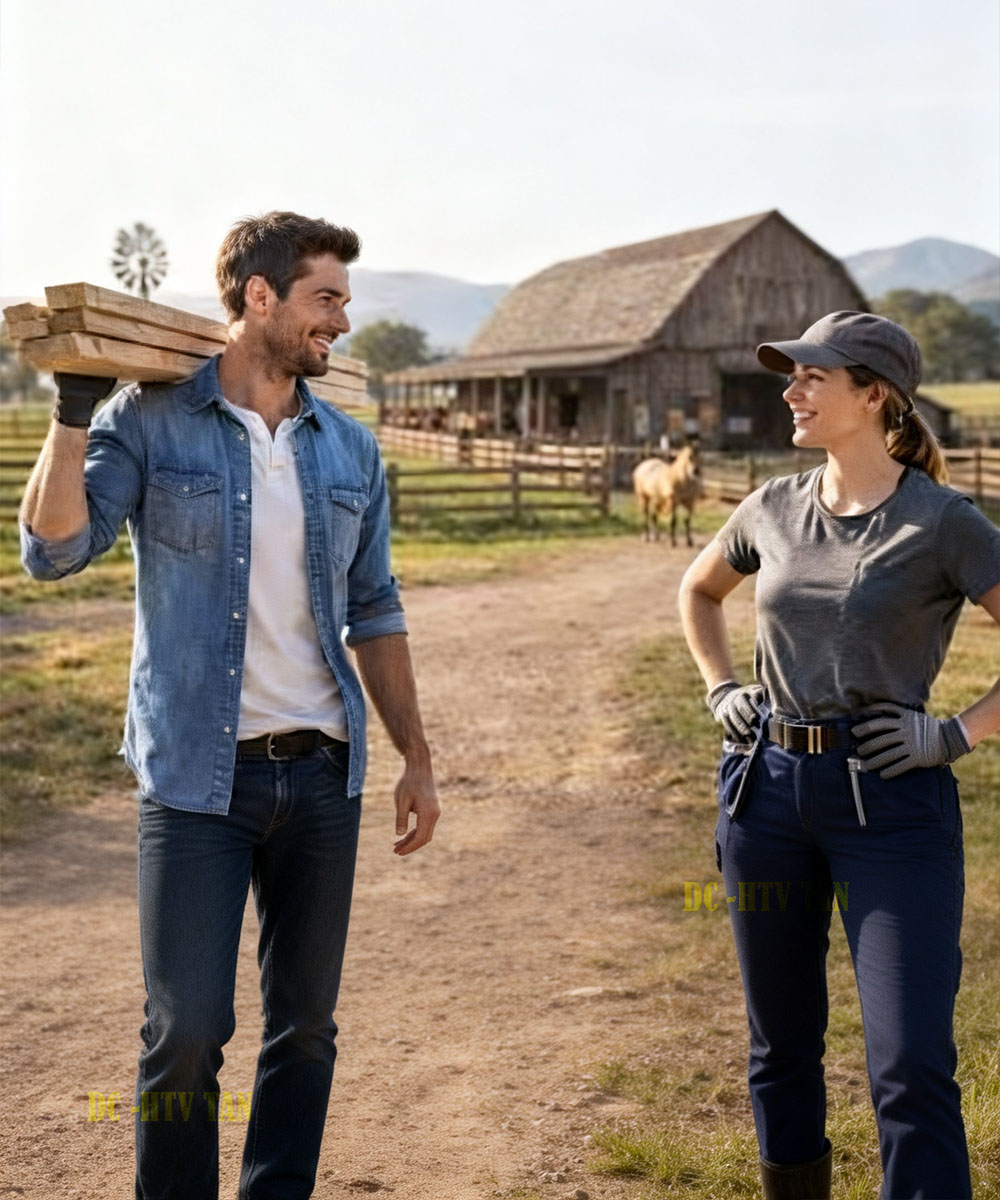
Then came the community barn raising. A whole crowd showed up—neighbors, friends, people with tool belts and thermoses—everyone working shoulder to shoulder. I focused on the lumber in my hands, telling myself to just get through the day, same as always.
That was when Emma walked up, smelling faintly of beer and boldness, and asked her question—far too loud for a gathering full of people who suddenly forgot how to breathe.
Hammers paused. Conversations died mid-sentence. Even the wind seemed to hold still. I felt every eye on me.
I looked at her—this brave, complicated woman—and answered with the only honesty I had left.
“No,” I said. “I’m still waiting for her.”
- The crowd heard it as a mysterious line.
- Emma heard it as a romantic excuse.
- I meant it as the truth that had kept me stuck for years.
Her cheeks turned red immediately. Confusion crossed her face, followed by something that looked like embarrassment. She thought I meant I was waiting for “the one,” as if I believed love would stroll into my life when the timing was right.
But that wasn’t what I meant. Not even close.
That evening, long after the barn raising ended and the laughter faded, I drove my usual route. I didn’t need to check the mirror to know I wasn’t alone. A pair of headlights stayed back, careful and quiet, like someone unsure whether to follow through.
Emma parked a distance away, keeping to the shadows. She probably thought I wouldn’t notice. But grief teaches you to notice everything—every sound, every shift in the dark, every presence behind you when the world goes quiet.
I walked through the cemetery gates like I’d done so many nights before. The grass smelled freshly cut. Old flowers sat in tired vases. The air carried that stillness that makes your thoughts feel louder.
Then I stopped where I always stopped—at the headstone that read: Sarah Carter, beloved wife.
“Tell me when I’m allowed to stop waiting,” I whispered to the stone.
I knelt, resting my palm against the cold marker as if it could somehow give warmth back. My voice came out rough, the way it always did when I spoke to her out loud.
“Today someone asked if I was married,” I said quietly. “And for a second… I forgot you were gone.”
The words felt disloyal even as I spoke them, like admitting I was tired meant I was failing her.
I kept talking, because I didn’t know how to stop.
“Five years,” I murmured. “Five years I’ve kept the promise I made. I haven’t let anyone close. I haven’t even wanted to. I’ve been walking around with this empty space where you used to be.”
- Grief doesn’t always scream—it often just sits there.
- Routine can look like strength from the outside.
- Promises can become chains when you don’t know how to loosen them.
Behind me, gravel shifted. A sharp inhale betrayed what the darkness tried to hide. I didn’t turn right away. I didn’t need to. I knew Emma had heard enough to understand what my answer at the barn raising truly meant.
“Is that you?” I asked the quiet, staring at Sarah’s name. “Is this… a sign? Or am I just reaching for an excuse to feel something again?”
No answer came—only the night air and the ache I’d carried for years.
I pressed my forehead to the stone, letting a few tears slip free. I hadn’t allowed myself that in months. Maybe longer.
“I’m tired,” I admitted. “I’m tired of being married to a memory. But I don’t know how to step out of it. I don’t know if I’m allowed to.”
Then Emma spoke, her voice trembling but clear.
“You are allowed.”
Her words didn’t erase the pain—but they made the silence less powerful.
I turned fast, startled by how close she sounded. She stood a short distance away, tears on her face, hands shaking at her sides like she’d walked into a moment too sacred to interrupt and couldn’t help herself anyway.
“How long have you been there?” I asked. I meant it as a question, but it came out like a warning.
“Long enough,” she said softly, nodding toward the grave, “to know what you meant. When you said you were waiting for her… you meant her.”
I stood slowly and wiped my face with my sleeve, embarrassed and raw all at once.
“I said I wasn’t married,” I muttered.
Emma stepped closer, not pushing, just closing the distance like she was trying to bring me back to the present.
“You’re not married on paper,” she said. “But you are tied up in grief. In guilt. In waiting for permission from someone who can’t give it.”
I wanted to argue. I wanted to tell her she didn’t understand what love costs when it’s real. But my throat tightened, and the words wouldn’t line up.
She swallowed hard, eyes shining.
“I asked you that question today,” she admitted, “because I’ve watched you for months. Not in a creepy way—just… I couldn’t help noticing you.”
Her voice steadied as she spoke.
“I’ve seen how gentle you are with animals everyone else has written off. How you fix what’s broken without making a big deal out of it. How you carry yourself like you’ve been holding something heavy for so long you forgot what it feels like to set it down.”
- She didn’t fall for a fantasy—she saw the real work of who he was.
- He didn’t need saving—he needed permission to breathe again.
- Healing didn’t mean forgetting—it meant continuing.
Emma moved a little closer, close enough that I could see the smudged mascara beneath her eyes and the fear she was trying not to show.
“I asked if you were married because I needed to know,” she said, “whether the man I’m starting to care about is still in there… or if he disappeared the day you lost her.”
The cemetery felt even quieter after that—like the world was waiting to see what I would do with the truth.
I looked back at Sarah’s headstone, then at Emma standing in front of me, brave in the simplest way: by showing up and saying what mattered.
And for the first time in years, I didn’t feel like I was choosing between loyalty and living. I felt like I was being asked to carry love differently—without turning it into a life sentence.
Conclusion: Grief can make time stand still, convincing you that moving forward equals letting go. But sometimes the most faithful thing you can do is keep loving—and still allow yourself to live again when the world offers you a gentle hand.