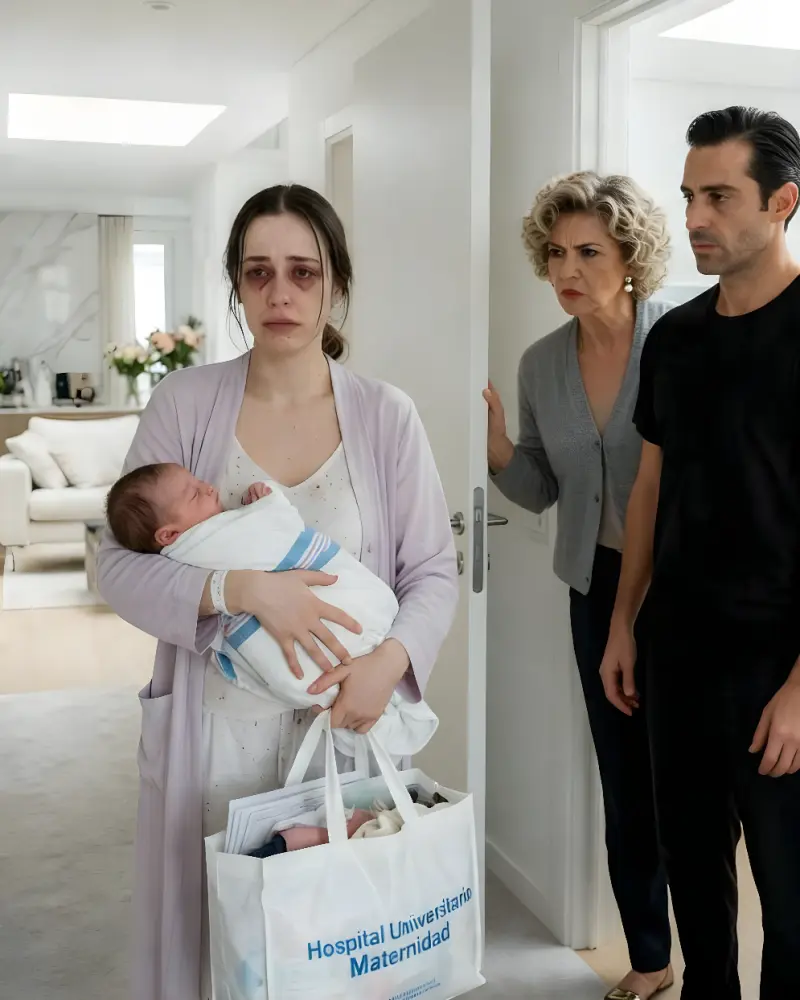
The day I came home
“Take the baby back to your parents. My mother needs peace and quiet, not crying and diapers.”
Those were the first words Rodrigo said to me when I returned from the hospital with our newborn son in my arms, still aching from my C-section and trying to hold myself together.
My name is Alma, I’m 31, and I work as an accountant for a home goods chain in Mexico City. I have always lived by numbers, schedules, and order. Maybe that is why it took me so long to admit that a marriage can fall apart while still looking perfectly respectable from the outside.
The apartment in Portales where we lived had been bought by my parents before I got married. It was in my name. Rodrigo had always known that. He also had control of the digital lock through his phone, and I never imagined that one day I would be standing outside my own home, unable to get in.
Small changes that became impossible to ignore
During the last months of my pregnancy, Rodrigo changed. His phone was always face down. He answered messages at all hours. He stepped onto the balcony to take calls. His mother, Doña Leticia, became more and more involved in our lives, as if our marriage were a family committee instead of a private relationship.
He never truly treated me with warmth, even though he called me “daughter” in front of others. In private, he repeated the same line over and over: “A wife must respect her husband’s home.” When I gave birth, he didn’t even come to the hospital. He said hospitals made his mother uncomfortable.
“A wife must respect her husband’s home.”
On the day I was discharged, a taxi driver helped me with the diaper bag and asked, “Where’s the father?” I smiled politely and said he was busy with work. The shame of that moment still stings.
The door that should have opened
I made it to the apartment as best I could, with baby Mateo sleeping against my chest. I entered the code at the door. Red. I tried again. Red. My hands went cold. Before I could even call for help, I heard footsteps inside. Rodrigo opened the door, wearing shorts and slippers, his face so cold he didn’t even reach for the baby.
I told him I was hurting, that the baby needed to sleep, that he should let us in. He leaned against the doorframe and said, as if he had rehearsed every word:
“My mother has moved in. Her blood pressure is high. If the baby cries at night, something could happen to her. You should go stay with your parents for a while.”
- He refused to let me enter my own home.
- He said my newborn son was a burden on his mother’s peace.
- He acted as if my legal rights did not matter.
When I asked for how long, he shrugged and answered, “A year… maybe two. Whatever it takes.”
Then Doña Leticia’s voice carried from inside, sharp and too strong for someone supposedly fragile: “And don’t bring that hospital smell in here. The house was just cleaned.”
My house. My apartment. My name on the papers. And yet I was the one left standing in the hall, exhausted, humiliated, and holding a sleeping baby who had done nothing wrong.
The moment everything changed
I reminded Rodrigo that the apartment belonged to me. I told him I wasn’t asking for shelter. I was coming home with his son. He looked at me with open contempt and said, “Don’t start with paperwork. I’m your husband. Family matters stay inside the family.”
Then his mother appeared, perfectly dressed, perfectly composed, wearing her gold chain as if she were presenting herself for judgment. “Everything here is done my way,” she said. “And if you want peace, you can leave with your family.”
I did not scream. I did not cry. I stood there, still recovering from surgery, and made one decision in that moment: I would not beg to enter my own life.
I took out my phone and called the building management, then the police.
Rodrigo went pale.
And as the call rang in my ear, I realized something was about to happen that none of them could undo.
Summary: That night, I learned that betrayal can wear a familiar face, but it can also be confronted. What happened next changed everything for me and forced everyone involved to face the truth.