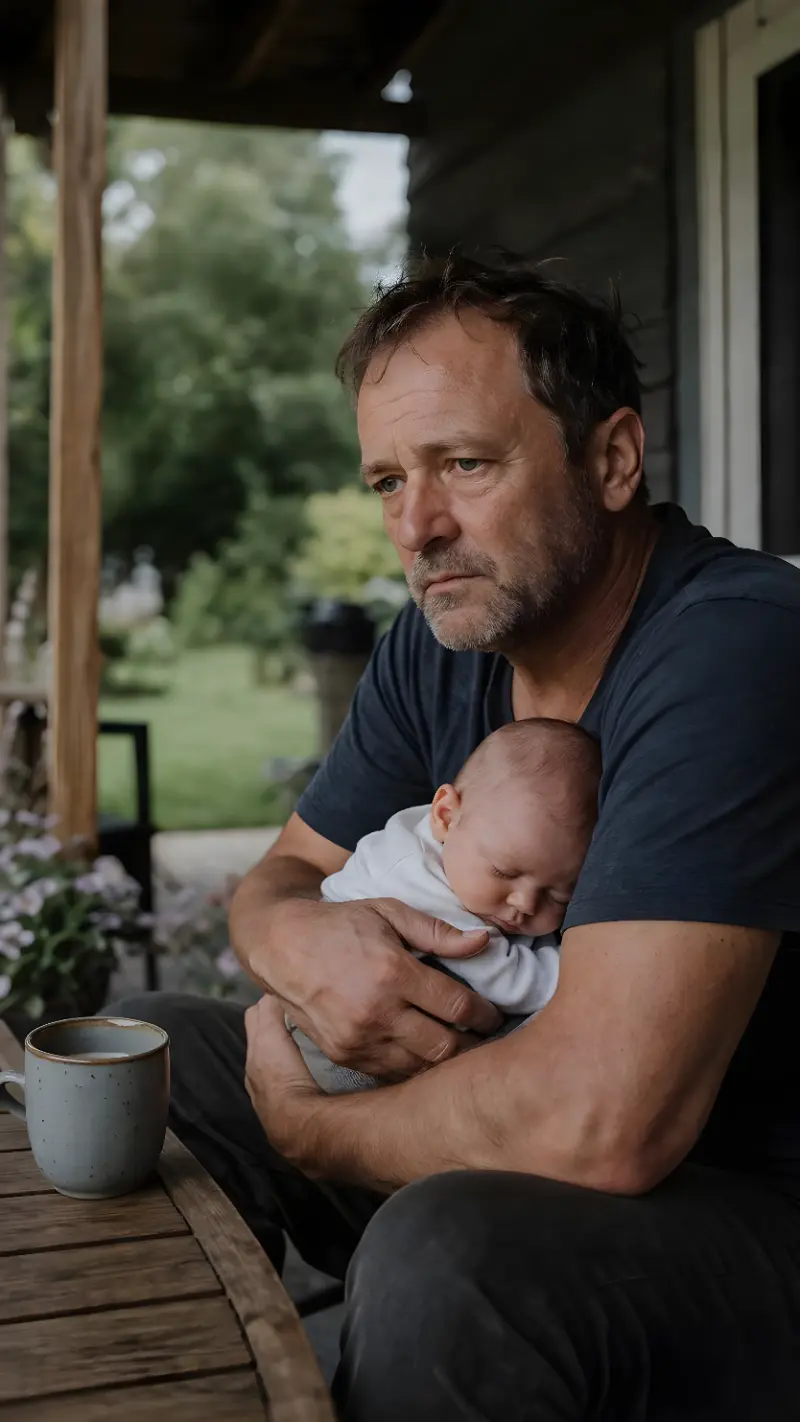
A cruel night that changed everything
Péter’s voice shook the old house as he shouted at Mária for wanting another child in her older years. She stood in front of him with one hand protectively on her belly, silently swallowing her tears. She did not answer with anger. Instead, she looked at him as if she were still trying to reach the man she once loved.
The family around them split in silence. Their eldest daughter, Klára, was cold and practical, already calculating costs and her own future. Fifteen-year-old Emma, however, stepped forward with trembling fingers and held her mother’s hand, promising to help in any way she could. And when the baby girl was finally born, Péter dismissed her with a bitter mutter: another daughter.
Yet he was the one who named her Anna. For a brief moment, Mária believed something in him had softened. But that hope did not last.
“If she is already here, then it must have been meant to be.”
Those words, spoken by Mária with quiet courage, would later feel like a painful memory, because only days after the baby arrived, her health failed in a way no one expected. She had always endured everything in silence, but her body could not carry the weight forever. One morning, she collapsed in the kitchen, and she never made it to the hospital.
A child left behind
After the funeral, grief turned into blame. Péter returned home broken and empty, but instead of embracing his youngest daughter, he rejected her. He claimed the baby had taken Mária away from him and refused to bring Anna into the house.
- Klára wanted to move on with her life and leave the child behind.
- Emma could not accept that her baby sister would be treated like a burden.
- The neighbor cared for Anna at first, but soon could no longer manage alone.
In the end, it was Emma who took Anna into the family home. From that day on, her childhood ended. She fed the baby, bathed her, rocked her to sleep at night, and gave her the love their father had withheld. Anna became her whole world.
Klára kept her distance, unable or unwilling to face the reminders of their mother’s death. Emma, though, made one promise she intended to keep: she would never abandon Anna.
Life did not become easier
When Anna turned one, Péter announced that he had met another woman and was leaving. He arranged for his mother to move into the old house and walked out with a suitcase, as if leaving behind a life he no longer wished to carry.
At first, the grandmother held the family together. The house remained difficult, but at least it was warm. Emma tried to balance school, housework, and caring for a small child. She gave up friends, leisure, and much of her own youth.
“Do not cry, my child. God sees everything.”
That was what her grandmother told her, offering comfort when the burden felt too heavy. Still, even with that support, the pain of being abandoned did not disappear.
A choice that could no longer be ignored
Half a year later, the grandmother went to Péter and his new partner, Zsófia. She did not soften her words. She told them plainly that a child was growing up without a father and that this could not continue forever. Zsófia admitted she had begged Péter to bring Anna home, but he refused to listen.
So she gave him an ultimatum: return to his children, or leave for good. That same evening, Péter came back with a suitcase — but without Anna. Zsófia shut the door in his face and made it clear that she would not build a life on rejection and shame.
Standing in the rain, Péter finally returned to the old house. The silence there felt different now, heavier and more expectant. His mother waited at the door. He stepped into the dark hallway, and then something happened that stopped him cold.
- A voice broke the silence.
- Péter froze, unable to move.
- What he heard next would alter the fate of the little girl he had once denied.
This is a story of grief, regret, and the quiet strength of the one person who refused to let a child be forgotten. Sometimes the heart that seems smallest can hold the most hope.